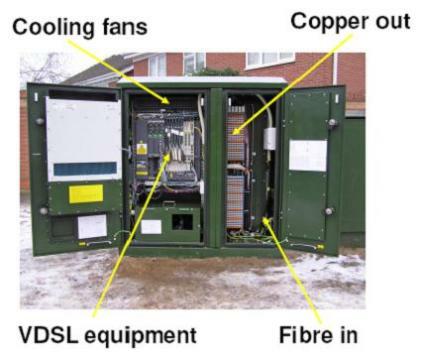
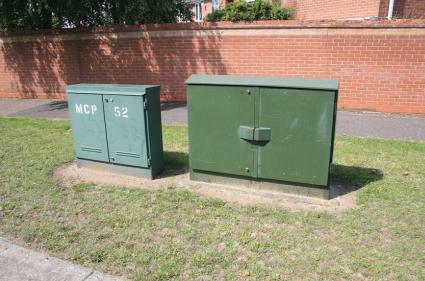
Three photos – first one showing a “normal” street cabinet next to a FTTC cabinet. The latter is much larger to be able to take the DSLAM kit. Exciting stuff eh? Thanks to BT for the pics.

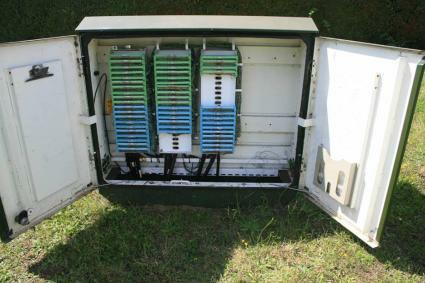
Second photo shows inside of a cabinet – no DSLAM in it yet.

The resource requested could not be found on this server!
Three photos – first one showing a “normal” street cabinet next to a FTTC cabinet. The latter is much larger to be able to take the DSLAM kit. Exciting stuff eh? Thanks to BT for the pics.

Second photo shows inside of a cabinet – no DSLAM in it yet.

Three photos – first one showing a “normal” street cabinet next to a FTTC cabinet. The latter is much larger to be able to take the DSLAM kit. Exciting stuff eh? Thanks to BT for the pics. Edit much later – the bottom cab is definitely an FTTC broadband cabinet, however the other two are not (pics came from BT so error somewhere in the process). Thanks to reader Andrew Benham for pointing this out. Thanks also to Andrew for the photos now inserted in this alternative and more recent post.
Second photo shows inside of an FTTC broadband cabinet – no DSLAM in it yet.
FTTC broadband exchange rollout posts have attracted a huge amount of interest on this blog. More so in fact than any other subject I have posted on. There is clearly a demand out there for the faster speeds.
There isn’t that much info out there on what the proposition actually is so I am happy to remedy this. The following spiel has been pinched from the BT Wholesale FTTC Handbook (thanks to BT for letting me do this) . This is normally only provided to ISPs who are reselling the technology/solution.
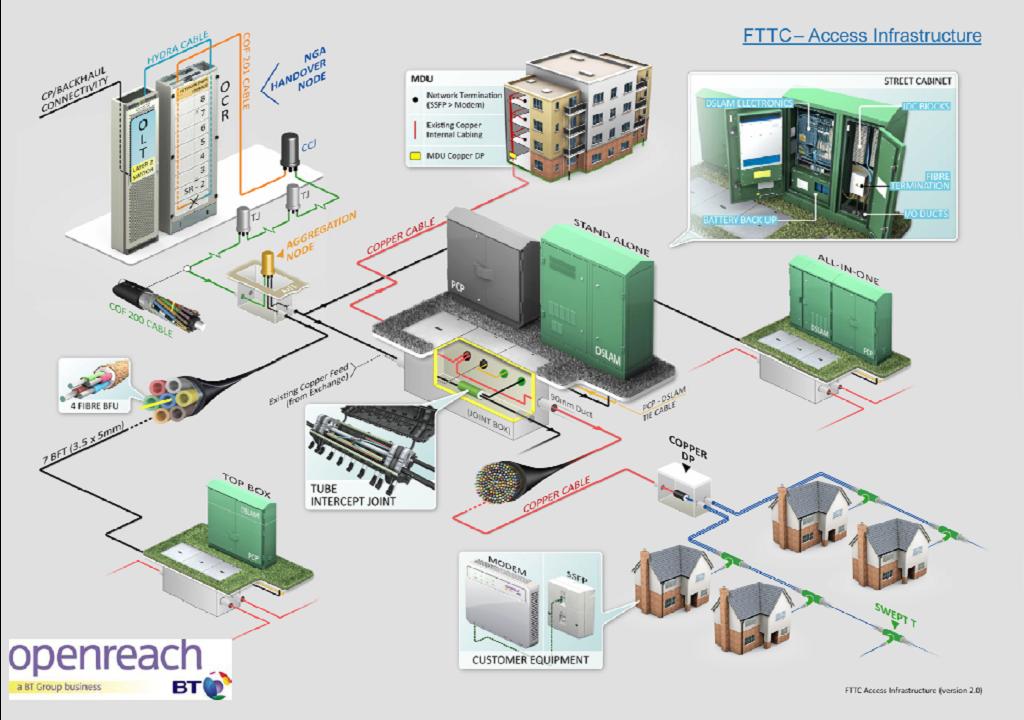
As is the nature of these things I have had to simplify the wording but if you see some complex technospeak it is probable left over from the original text. I’m afraid there is no getting away from the acronyms. The diags are BT (Wholesale & Openreach) originals.
FTTC Intro
Fibre To The Cabinet (FTTC) utilises BT’s 21st Century Network. If an ISP already offers ADSL2+ services based on