Merhaba canım, ben sıcak saatler yaşatmayı aşırı seven Sakarya Söğütlü escort Irmak, 28 yaşında, 1.73 uzunlukta, 50 kilo, sarı saçlı ve beyaz tenli olan güneş aynı şekilde bir kadınım. Güzelliğim ve s...
Merhaba canım, ben şehvetli Sakarya Serdivan escort Sevinç, 27 yaşında, 1.77 uzunlukta, 51 kilo, esmer tenli bir bayanımdır. Ben sekste sınırsız ve özgür olmayı severim. Ayrıcalıklı cinsellik oyuncakl...
Değerli beylere ve elit erkeklere Sakarya escort olarak merhaba demek istiyorum. İsmim Hülya, olgun bir bayanım ve aynı zamanda 30 yaşındayım. Ama yaşıma rağmen de muhteşem bacaklarımla ve kalçalarıml...
Gecelerin sarışın güzeli Sakarya Kocaali escort Elçin gönülleri hoş etmek için yaratılmıştır. Ben 24 yaşında, 1.75 boyunda, 52 kilo, esmer tende olan bir bayanımdır. Muntazam fiziğim ve seksi vücudum ...
Genç ve alımlı güzel Sakarya Söğütlü escort Sıla’dan kucak kucak selamlar, 20 yaşında, 1.75 uzunlukta, 51 kilo, buğday tenli olan güzel bir bayanımdır. Azgın bir cinsellik hanımıyımdır nedeniyse ilişk...
Sonur’dan kucak dolusu merhabalar, ben 26 yaşında, 1.78 boyunda, 52 kilo, bronz cilt olan zarif bir Sakarya Serdivan Bayan Escort bayanım. Güzel ve keyifli saatler geçirmek için yaratılmış Sakarya esc...
Ben sınırsız ilişkiler sürmeyi huy edinmiş güzel Meyra, 23 yaşında, 1.79 boyunda, 52 kilo, karamel tende olan zarif yapılı bir bayanım. Benim muhteşem vücudum ve azgın cinsellik tutkum sana en görkeml...
WebRTC promises to be a disruptive technology that truly moves internet communications into the 21st century. WebRTC notionally fixes many of the interoperability that issues that have hung around with VoIP, and with SIP in particular and moves the business model on.
Contextual communication, AI and chatbots are on track to revolutionise the way we communicate, prompting experts to herald the dawn of a major communications revolution. What about the contact centre, and how does WebRTC underpin this shift towards improved customer engagement?
More than just chatbots
Most of us have already grown accustomed to talking more and more with machines. Consumers have been given a taste of this new era of communication with the likes of Siri and Alexa, but we’re starting to see this new technology make its mark in the business world. Some contact centres, for instance, are starting to use chatbots to deal with common queries and complaints based on database suggestions. We’ve also witnessed a number of councils using a form of AI as a virtual agent to deal with front line requests. As the number of interactions increases, we can expect to see robots like this learning rapidly and becoming more sophisticated.
However, the impact of AI and machine learning is greater than just for improving chatbots. If we look at the bigger story we can see there is another innovation gaining a foothold in the industry: contextual communication. Made possible by open web technologies like WebRTC, it enables context to be added to every communication to make customer interactions more efficient, personalised and engaged. These contextual communications applications mesh together pertinent information in real-time from CRMs and other databases. The end result is the ability to deal with customer enquiries via web video, chat box or through a mobile app.
The value of context
This is where AI can make a dramatic impact. Determining the right information and communication “context” to serve, informed by a wealth of data, leads to better decision making throughout sales or customer service processes. This ultimately leads to a greater customer experience and applies equally to customer-facing chatbots as it does to virtual assistants. Imagine a VA that could recommend the next course of action for a customer service agent or salesperson to take. Then, move it a stage further and consider that cognitive interactions will understand accents, sentiment and context. This will enable even greater personalisation and decision-making capabilities – a far cry from today’s annoying automated services.
This is how the future of enterprise communications is shaping up – making communication “transparent”, so it’s integral and inherent in applications, and augmenting it with context. What does it mean for ITSPs? We can start with differentiated propositions offering huge productivity and efficiency gains – and a more natural communications experience for customers.
Join us next week to learn more
We’ll be discussing these impacts and more at the ITSPAWebRTC Workshop next Thursday 28th September, Central London. Both Tref and I will be keen to hear your views on contextual communication and how it can drive new revenue opportunities for ITSPs in the coming years. If you are in London and want to come along, register here – it’s free – using the member’s registration.
Three years ago we hosted a WebRTC workshop and back then the promise was there to be seen but the reality seemed a long way off. Now we’re teaming up again with ITSPA to take a fresh look at WebRTC – where is it now and what real applications are out there? One of our guest speakers, Rob Pickering, is a big WebRTC advocate and in fact his company, IPCortex, did the UK’s first public demonstration of a call between a web browser and the PSTN using WebRTC at their 10th birthday party, back in 2012. I know, because I was there and witnessed it!
Now I think it’s fair to say that WebRTC has really come of age and Rob will be bringing us up to date. Standards are now firm and Apple recently announced it will support WebRTC for the first time bringing browser support to the brink of ubiquity. All of this has made it easier to realise the full benefits and mass deployment of WebRTC. Rob believes this will mean a disruptive impact on the way people communicate, for good.
The sort of stuff we’re going to see are where developers remove any complexity and barriers to smooth communication by embedding audio, visual, chat, file and desktop sharing directly into web pages, browsers and even IoT and mobile platforms without plugins. People can just start communicating from the same space they’re already doing a task. We’re calling this “contextual communication” – a phrase you’re going to hear a lot of in the industry in coming months and years.
Developers are already building applications that solve the challenge of siloed non-unified platforms and distracting “context switches” – the design point being to deliver the internal efficiencies they know that businesses need, while also enriching the experience for external contacts – whether they’re contractors or customers.
Looking at some of the examples around call centre empathy, right through to private healthcare consultation – and of course day to day business communication – I think we’re really only now starting to reimagine the ways in which we can transform and open up communications. WebRTC will be the enabler of the way we communicate in the future and ITSPs especially would do well to get involved, now.
Join Rob Pickering, CEO at IPCortex and others from Genband, Oracle, Sonus Networks, Netaxis at the WebRTC Workshop and find out how ITSPs can use WebRTC to make money, on Thursday 28th September, Central London. If you are in London and want to come along just register here – it’s free – just use the member’s registration.
WebRTC Workshop – how ITSPs can use WebRTC to make money
Trefor.net has once again teamed up with ITSPA to provide you with relevant workshop content. The last time we looked at WebRTC was a good three years ago. At that time all most of us could say was “uhuh”. We saw functionality that we had been used to in the SIP world for years. We could see the promise but there were too many things yet to be solved.
So where is WebRTC now? Applications are beginning to emerge and the vendor infrastructure is mature enough to consider the technology mainstream. WebRTC has progressed. It’s about time we took another look at the subject.
On Thursday 28th we have a workshop that will cover all relevant aspects of WebRTC technology.
We start with our friend Rob Pickering, CEO of IPCortex who is going to bring us up to date with the standard and support for WebRTC.
We have vendor presentations from Genband, Oracle, Quobis, Sonus and IPCortex together with Netaxis.
Normally I’m not much of a one for vendor presentations. however in this case they are very useful and will cover two things. Firstly they will give us a heads up on what we can do with their products and secondly look at real world applications/case studies.
We will finish off with a panel discussion on how Service Providers might incorporate WebRTC solutions into their offerings.
Let me know if you want to stay for the meal afterwards as I will need to sort numbers. Finally I’d like to thank Osborne Clarke for their usual very generous providing of the venue and refreshments. They are a great supporter of ITSPA.
Last week I explained how we at IPCortex were working with a social enterprise called Founders and Coders to use WebRTC to help solve some social challenges.
The plan was to introduce the ambitious FAC team (16 trainee Javascript developers), to WebRTC via a week long workshop. We’d then support them in using the IPCortex API to quickly put together proof of concept applications for other social enterprises. Afterwards, we’d demo it together at TADHack, the go-to event for devs pushing the boundaries of WebRTC.
TADHack was last weekend and I’m proud to be able to share more about the application we developed, called Confidant, and what we learned during the process.
Developing an idea
The idea we selected comes from a real life requirement brought to us by a charity and an NHS Trust. Their aim was to enhance the provision of youth mental health counselling services remotely: an idea that demonstrates the feasibility of using WebRTC to provide better access to support services. They’d use a community of volunteers on related university courses to provide supervised mentoring services – with the mentors receiving credit for professional experience gained by volunteering their time.
The original intention was to split the development team up and do several different smaller scale hacks. However, the use case for Confidant was very tangible and so well thought out that it immediately caught the team’s imagination. They were excited about making a real difference and decided they wanted to work as one team to deliver the best possible proof of concept hack in the time available.
From zero to demo in 7 days flat
By the time we got to talking about the hack we’d been working with the Founders and Coders students in the WebRTC workshop for a couple of days. I’d seen them working individually or in small groups on some basic WebRTC practical exercises, but wasn’t sure how a huge project with 16 student developers, all working to deliver one application, was going to work. To add to the challenge, they mostly work in React, a technology about which I knew nearly nothing before this week. It looked like I would be learning a lot too.
What came next was a big surprise. Just to recap, this was a team of 16 trainee developers who are about 12 weeks in on an intensive Javascript course. This was their first taste of the real time web and telecoms APIs, and I think also the first time they had worked on a project of this magnitude in a large team. They pretty much immediately, and with no externally obvious single point of leadership, organised themselves into a couple of sub-teams to analyse the requirements and map user journeys for the mentor and client respectively.
The sub teams then presented their results back and a working priority feature list and realistic plan of what was feasible in a couple of days development was quickly produced. A git repository and wiki were there from the start to share information and track issues from the requirements analysis stage. This was by far the most professional hack development process I have ever seen!
Three incredibly intense days later they presented Confidant together at TADHack (video at the bottom of this post). I had the opportunity to present with them about the whole process at the WebRTC Global Summit on Monday, and the positive feedback was overwhelming. You can read a bit more in the Prezi I created for the session.
The next step is to present the application back to the charity customer, and hopefully find some buy-in and resources to start work on taking it a minimum viable product, so that it can be deployed as a pilot to see how it works in real life.
Overall it’s been a fascinating process. We’re delighted to have had the opportunity to use WebRTC for social good and hopefully do our bit to help improve mental health services for young people.
Rob Pickering is CEO of communications company IPCortex and is a good friend of this blog.
A few weeks ago, I came across a social enterprise called Founders and Coders. They provide free Javascript development courses in East London via peer learning, mentoring and exposure to projects brought to them by other social enterprises and corporate clients. It’s an innovative response to the skills gap that most of us in the industry are acutely aware of.
I had a chat with the current cohort on the kind of the capabilities that can be introduced into applications using WebRTC. They were fascinated and we quickly hatched a plan for us to run a training workshop with them and following on from that, a development project where we invite third sector organisations to present ideas that Founders and Coders can take forwards into proof of concept hacks.
Yesterday was the first day of the workshop, and we were able to quickly get them up to speed with how WebRTC works and how they can use the IPCortex API to make phone calls and initiate video chat.
We are finishing the workshop today and start work on a project with a really interesting real world social use case first thing tomorrow morning. There is lots to do, but the intention is to take the idea to TADHack London which is conveniently happening over this weekend to work on it a bit further.
We’ve already selected the project from a health charity that we will develop, and I’ll talk a bit more about the it as it starts to unfold, but it is ambitious! None of the FAC students participating will have been exposed to implementing real time communications before the workshop which started yesterday, and by the end of the week they will have hopefully developed a real application from scratch. I don’t think we have ever done anything like this on this kind of timescale before but it is going to be great fun. We just might also generate something that has a lasting impact using communication for social good.
Rob Pickering is CEO of communications company IPCortex and is a good friend of this blog.
The WebRTC apps competition we ran in conjunction with/sponsored by GENBAND came up with three clear leaders and one eventual winner. One entry showed how WebRTC would be monetized and the others presented their solution it as an an overlay to existing support services.
The idea was that entrants would be given free accounts on the Genband Kandy WebRTC Platform as a Service and then use those accounts to put together innovative service ideas.
The judges were hugely impressed at the number of levels Metronet were able to utilize WebRTC and KANDY. The technology was used in a mobile devices, M2M connectivity to their monitoring systems and integrated into their core CRM platform. The solution also utilized messaging, file sharing, voice, video, conferencing and collaboration.
Metronet have based a large amount of their success in both their Data and Voice offering on their proactive customer service and saw the potential to be able use WebRTC to grow that service commitment still further. The underlying monitoring platform was already in place so triggering a the group message to the Engineering Application from there was quite simple. Metronet were able to use the KANDY reference mobile apps to very quickly allow the engineers access to the group from both Android and Apple mobile devices.
By then adding WebRTC calling into their NOC CRM they were able to build a consolidated environment fault resolution environment for voice, video, conferencing and collaboration with the result of a “cradle to grave” resolution for faults so inevtiably improving already impressive SLAs.
Everyone involved would like to congratulate Metronet for their entry and look forward to seeing more of their inventive use of the technology.
Stuart Goble, GENBAND VP Sales UK, Ireland and Nordics was pleased with how the competition and sponsorship went: “Metronet took a real business problem and defined a solution using KANDY technology. The application is built with a combination of rich-messaging and real time voice and video provided by the KANDY platform. KANDY provides a set of tools that makes the process simple for IT developers, allowing very specific applications like this to be cost effectively developed.”
In conclusion:
Winner is Metronet – WebRTC and Metronet portal advances engineer response
Second Place – Manor Telecom – WebRTC powers the “webphonebox.com”
Third Place – DRD – WebRTC powers Uboss Test line functionality
See our WebRTC section on this blog for other related posts.
The WebRTC apps competition we ran in conjunction with/sponsored by GENBAND came up with three clear leaders and one eventual winner. One entry actually showed how WebRTC would be monetized and the others presented their solution it as an an overlay to existing support services.
The idea was that entrants would be given free accounts on the GENBAND KANDY WebRTC Platform as a Service and then use those accounts to put together innovative service ideas.
The second WebRTC Apps Competition finalist was DRD Communications. DRD will be more familiar to you as the holding company that owns the Vanilla IP Broadsoft wholesale provider..
DRD’s simple but very effective entry showed the simplicity by which WebRTC via the KANDY APIs can be integrated into existing successful applications to provide useful day to day functionality. The original scenario allowed DRD to add a test calling function to their augment their market leading back office provisioning, billing and integration Uboss www.uboss.com but the same JavaScript APIs could have just have easily been used to provide voice and video access to a support engineer or sales representative. Additionally using the conferencing and collaboration functionality provided by the KANDY platform those conversations could allow users to be walked through configuration or other troubleshooting scenarios on a shared screen.
The judges saw that the DRD’s development company were implementing small and simple code additions to an already powerful management platform to provide significant functional options. The code they used meant they could quickly apply the WebRTC/KANDY functionality to other areas of the application allowing them to react quickly to Uboss developments or potentially to a customer’s needs.
This application is likely to one of the big wins for the WebRTC technology.
See our WebRTC section on this blog for other related posts.
WebRTC apps competition winners include monetisation of the technology
The WebRTC apps competition we ran in conjunction with/sponsored by GENBAND came up with three clear leaders and one eventual winner. One entry actually showed how WebRTC would be monetized and the others presented their solution it as an an overlay to existing support services.
The idea was that entrants would be given free accounts on the GENBAND KANDY WebRTC Platform as a Service and then use those accounts to put together innovative service ideas.
Manor IT’s “WebPhoneBox” entry impressed the judges as it directly monetized the WebRTC where as other entries used the technology to augment services improving existing commercial or business process functions. The Website allowed Manor to address the maximum subscriber audience on two levels. Firstly it was designed so you could use the service without having a to register an account just like a “PhoneBox” but secondly the access could be from any device and network without having to download an app.
To make a call the user logs onto ‘www.webphonebox.com” website (currently this function is in beta and not openly available) and enters the dialed number, payment method and payment amount. This information is then securely passed to the Manor IT Application Server. Alternatively existing account details and DDI can be used.
The Application Server verifies the payment details with the appropriate financial house.
The destination tariff is identified via Manor IT’s JeraSoft rating platform providing a maximum call duration. An authentication token is then provided to the KANDY WebRTC platform and passed to the web browser which then initiates the call
The call can then be established through KANDY and via Manor IT’s Session Border Controllers utilizing and utilizing Manor IT’s full LCR. 1 minute before call is cleared down a pop up allows the user to top up the account.
Using this method of paying for a call groups of people can share PC or Tablet devices far more easily as logging out of the website or the time restrictions on the access keys meaning there is no fear of other users accidently using their credit. The inbuilt WebRTC protocol NAT traversal and variable codecs on the media path coupled with the use of HTTPS on the signaling path means that any network should be usable even if it is locked down for SIP (e.g. Hotel WIFI) or has complex NAT or bandwidth issues.
Overall this was a simple idea that used various properties of WebRTC to provide an innovative solution and Genband congratulate Manor IT and their development are Devine IT www.divineit.net.
See our WebRTC section on this blog for other related posts.
Neil Wilkinson was the author of “Next-Generation Networks: Technologies & Services” – for John Wiley and is the owner of Aeonvista Ltd (http://www.aeonvista.com/) . Aeonvista is an ICT Consultancy created by Neill in 2007 who look to maximize the best in class technology thinking to inform their customers. So generating strategic solutions that meet the needs of both large and the small organizations. He writes the final guest post in the GENBAND series on WebRTC.
Some years ago now I published a paper titled “SIP Based Call Centres – A vendor independent architecture for multimedia contact centres”. Thanks to the wonders of the Internet this can still be found at Recursovoip. The paper was based on a number of ideas I put forward in the John Wiley book in 2002, “Next Generation Networks – technologies and Strategies”. Subsequently in 2008, I expanded my ideas to encompass presence in the contact centre in the paper “The Ghost inside the machine”.
The paper discusses the use of automation using voice recognition and intelligent routing to provide front line integrated customer care in the form of a HelpBuddy – essentially a clickable “friend” in the contact list of an Instant Messenger client, like Skype or Google+ chat applications. The H☺lpBuddy™ represented the summary availability of agents in a multimedia contact centre, and even takes into account queue times and automated FAQ and IVR options.
To a degree, whilst the idea had solid foundations in SIP Presence and in 2008 the fledgling XMPP based presence protocols, realising this idea and extending it to the now familiar (or irritating depending on your mode) pop-up you find on website “Hi my name is Bob, may I help you today?” was difficult and required lots of custom code.
Roll forwards to 2015, and we now have much more of these kind of pop-ups and even products like Amazon’s Mayday have started to proliferate the web. WebRTC is now the most exciting capability for delivering real-time voice and video communications without the need for complex bespoke code, or dedicated applications. The promise of the “no plugin” enable multimedia communications H☺lpBuddy™ is finally realisable.
Let me re-think/re-word that last paragraph, especially the “need for complex bespoke code” part. Well it’s still somewhat complicated to deal with multi-platform multi-browser, and even different versions of the same browser family, as each has its own “versions” of APIs and ways of dealing with WebRTC based communications. Whilst standardisation is happening in the W3C, support across browsers is… hmm – well different – http://iswebrtcreadyyet.com/. The recent release of Windows 10 and its shiny new browser “Edge” has not exactly helped this picture.
So you’re probably wonder where I am going with this…. TaDah! – Kandy Platform standardisation for WebRTC. A common library of code, that makes it easier to create multimedia apps that will run in any browser and any device, and better still the ability to glue the SIP world in to realise my H☺lpBuddy™ dream. Now whilst there are other options for javascript libraries for example the aptly named WebRTC.org, and the ubiquitous SER (Kamailio, OpenSIPS), Freeswitch and Asterisk are nudging closer every day to WebRTC support, those helpful people at GENBAND keep all the hard work in dealing with those ever varying APIs hidden behind their libraries. WebRTC enables peer to peer communications directly between browsers (even behind that pesky NAT firewall), but in order to do that a web server is required to facilitate that initial rendezvous, the Kandy platform does all of that too.
So you now have some real choice when it comes implementing applications for the real-time web, Kandy provides a really nice set of features and “glue” to enable multimedia capabilities in Contact Centres, time to have a play with those Javascript libraries….. (https://developer.kandy.io/docs/js-sdk/js-sdk-2-3). Maybe it’s finally time to have a go at getting H☺lpBuddy™ off the drawing board.
Loads of posts on WebRTC in general on this site here.
Read the previous posts in this Genband sponsored WebRTC week:
Carlos Aragon, Senior Solutions Marketing Manager at GENBAND, asks ‘how might UC vendors and service providers profit from WebRTC’? Carlos has extensive experience with both mobile and fixed-line UC services, Unified Communications as a Service and WebRTC. Today, he is intimately involved in GENBAND’s Hosted UC offers to both service providers and enterprises.
Last week, I fielded an interesting question on WebRTC.
“If WebRTC is an Open Source technology, how can companies like yours profit from it?”
While I provided a fast answer to the customer (time is crucial when dealing with customers), I believe this topic is worthy of further discussion. Firstly, we need to clear up some misconceptions.
Open source software is not always free
There are still people out there that have this equation locked into their brains:
Open Source = Free
And it is partly true, just partly. First, not all open source is free, it depends on the license that you get with it. For example, there are open source projects that are free for personal or educational use but when you want to use it commercially you have to open your wallet.
Even if the software itself is free e.g. Linux or Asterisk, there are still ways for individuals and companies to profit from it: training, installation, operation, maintenance, professional services… The list of profitable options is quite large.
In the case of WebRTC in particular, the technology behind it is not totally open source. Yes, the HTML5, Javascript and CSS3 technologies that constitute the basis of WebRTC are free. The codecs, however, are a different story, not all were free until recently.
H.264 is a royalty bearing codec and there was some friction with it because an open project like WebRTC could not use a for-profit codec. VP8 was proposed but its lack of hardware acceleration on mobile devices was a serious handicap. In the end, WebRTC made both codecs mandatory thanks to someone else taking the royalty tab (in this case Cisco via their browser plugin).
So now that WebRTC is truly free, and ignoring for now the training, consulting and professional services opportunities, there are still other ways for companies like mine to make money.
The do-not-throw-that-away factor
Contrary to what companies try to force on consumers – that everything has an expiration date and we are supposed to discard old products and embrace the latest novelty – when it comes to their infrastructure and assets they want to make them last as long as possible.
Sometimes the motivation is their own amortization schedules, other times it is because of their existing customers and this is particularly true for Communications Service Providers (CSP). Customers that are happy with a service or a device take a long time to accept a new technology (especially if the user experience changes and it means they have to learn how to use it).
If everyone exclusively used a WebRTC browser (like Chrome, Firefox, Opera) all the time, it would be feasible to have every person in the world communicating using pure WebRTC and most CSPs would go out of business or relegate themselves to the role of a broadband pipe provider. Reality however is somewhat different. Almost everyone out there has a phone, whether it is mobile, fixed or attached to a business PBX and these phones are not going to disappear anytime soon.
There needs to be a connection between that legacy phone world and the new web world and that is where companies like GENBAND are leading the way in WebRTC. We were the pioneers in launching a WebRTC Federation Gateway that provides the interworking (signalling and media) between the traditional CSP networks and the WebRTC browsers. CSPs are willing to pay someone a little money to preserve their larger investments while, at the same time, enable their networks to find new revenue streams facilitated by WebRTC.
And if that WebRTC Federation Gateway also brings SDKs for iOS, Android and Javascript to allow the developers to save time interconnecting to the CSP’s network, then you have another community that will be willing to pay a reasonable fee.
But not everyone wants to build applications or maybe they don’t have the skills for it. In that case, there are companies such as SAP or IBM and other specialist developers that will be happy to build the WebRTC applications for a cost.
And if someone wants to build an application that benefits from WebRTC, how will they interconnect it to the telephone network? What if they are a small developer? In this case, it is better to get a platform-as-a-service solution such as Kandy that allows them to access and use the real time communications features that they need for an affordable cost.
So where’s the webrtc monetisation?
WebRTC is a new frontier where there is a lot of land ready for the taking, and whoever comes first and does a good job building a brand, a reputation and a good service and product portfolio will harvest the fruits. Here is a summary of the areas related to WebRTC where profit can be found:
Network Federation – products or cloud services that provide interconnection between the legacy networks and the new WebRTC world. Includes signalling and media.
Application Development – companies or individuals that build tailored applications for service providers, enterprises or organisations.
Professional Services – Network design, planning, consultancy, installation & commissioning, operation & management, maintenance, troubleshooting, support, etc.
Training – Technology training, user training, product literature, as with any new technology, there are people who have the knowledge and there are people who need the knowledge.
Platform-as-a-Service (PaaS) offerings – the middleman that wraps the real time communications services into a package that developers can embed into applications easily and affordably.
These are the ways I could think of. If you have any more, or you don’t agree with these. I would definitely like to hear about it in the comments.
Try out WebRTC for yourself… GENBAND KANDY is a real-time communications Platform-as-a-Service that provides access to voice, video, rich-messaging and collaboration services using WebRTC as an enabling technology. Developers can sign up to KANDY and start using their free accounts to run Quick-Start tutorials before integrating into their own applications. ITSPA UK members can enter their KANDY applications and ideas into the GENBAND UK Summer of Apps competition.http://www.trefor.net/events/webrtc-apps-competition/
Read my previous post on WebRTC monetisation on trefor.net. Loads of posts on WebRTC in general on this site here.
Read the previous posts in this Genband sponsored WebRTC week:
Onwards and upwards for business telecoms WebRTC says Peter Gradwell
In the fourth of our WebRTC articles this week Peter Gradwell , Founder of Gradwell Communications, explores the buzz surrounding WebRTC and what it means to small business. Peter started Gradwell Communications because he couldn’t find the communication technology he needed for his own business, so he developed it. Gradwell has grown year-on-year, now handling communication services for nearly 22,000 small business customers. Peter is a founding member of the Internet Telephony Service Providers Association and has served on industry advisory boards and has lobbied domain policy and VoIP regulations.
Nowadays it is more and more common to see SMBs adopting new communication technologies. From feature-rich hosted VoIP services (like those provided by GENBAND NUViA), to the latest in Cloud tech, more than ever SMB’s are looking for a competitive edge over their larger counterparts. And whilst in this field we can find innumerable combinations and products, many customers just want a basic PBX seat at a reasonable price.
Therefore, for those customers looking for a straightforward, no nonsense communication over IP service, I am happy to give praise for WebRTC. Which gives an open framework for the web that enables Real Time Communications through the browser. It takes into account the fundamental building blocks for high quality communications on the web such as network, audio and video components used in voice and video chat applications; thus allowing a really different sales pitch into the SMB market through bespoke IT integration.
So, as a small business, which are the main benefits that I gain from adopting WebRTC?
It is built on the strength of the web browser: WebRTC abstracts signalling by offering a signalling state machine that maps directly to PeerConnection. Web developers can therefore choose the protocol of choice for their usage scenario (for example, but not limited to: SIP, XMPP/Jingle, etc…)
The calls from the website are delivered seamlessly either to existing VoIP platforms or can be received on web-based agent desktops.
For the agent, it is possible to receive the customer calls from inside their browser based CRM systems so that they are delivered with customer information and website context.
Once customer and agent are in a conversation, video, co-browsing and screen-sharing can be used to provide a co-ordinated multi-channel customer experience.
WebRTC is already integrated with best-of-breed voice and video engines that have been deployed on millions of end points over the last 8+ years.
Includes and abstracts key NAT and firewall traversal technology using STUN, ICE, TURN, RTP-over-TCP and support for proxies.
Combining all the functionalities already listed and an open and free project that is supported by companies like Google and Mozilla; one can see why there is such a buzz surrounding WebRTC. Just another example of how the evolution of the internet never takes a break.
Loads of posts on WebRTC in general on this site here.
Read the previous posts in this Genband sponsored WebRTC week:
WebRTC and client container technology – lower deployment costs without sacrificing functionality
In the third of our WebRTC articles this week, Ralph Page, Strategic Solutions Director at GENBAND, looks at the emergence of client container technology.
We’ve seen an explosion in Unified Communications solutions, each bringing their own ecosystem of apps to match a bevy of new devices. This hyper connectivity stampede means that a Service Provider launching a Unified Communications service needs to offer clients for PC, Mac, tablets(i.e. iPad & Android), phones (i.e. iPhone & Android) and Web browsers. Each of these clients’ needs to be kept up-to-date, driven by changes from both device vendors and operating system providers.
Further, some customers want custom-branded clients; each of these also has to be touched each time the base client is updated. Ultimately, Service Providers finds themselves upgrading at least one of their UC clients every quarter and potentially touching every customer that has a custom branded variant.
UC clients are particularly susceptible to OS and device changes because their very existence is tied to unifying multiple services and leveraging multiple device functions (speaker, mic, location, etc.). Not to mention that real time services don’t respond well to performance issues from lagging operating systems or apps.
In theory, simple WebRTC browser-based clients should be a cost-effective alternative. Using a browser means that changes are centralized in a web server. Web developers can customise features or deliver customised branding to individual enterprises using HTML5. No need for multiple apps and app store issues.
However, native WebRTC browser based clients, especially in mobile devices, have limitations. First and foremost, some devices don’t support WebRTC compliant browsers. More importantly, many mobile devices don’t give the browser access to push notifications services or allow access to contact lists or leverage battery-saving techniques.
Recently a new concept has emerged that leverages WebRTC and HTML5 but offers access to the best bits of the device’s operating system for push notifications, on-screen pop ups or the ability to start-up when the device starts. Unlike a simple browser, this new model uses a client container to dupe the device operating system into thinking it is a full application. However, the container itself runs its own browser so it can display the HTML5 content and deliver WebRTC services.
Try out WebRTC for yourself… GENBAND KANDY is a real-time communications Platform-as-a-Service that provides access to voice, video, rich-messaging and collaboration services using WebRTC as an enabling technology. Developers can sign up to KANDY and start using their free accounts to run Quick-Start tutorials before integrating into their own applications. ITSPA UK members can enter their KANDY applications and ideas into the GENBAND UK Summer of Apps competition. http://www.trefor.net/events/webrtc-apps-competition/
Loads of posts on WebRTC in general on this site here.
Read the previous posts in this Genband sponsored WebRTC week:
In the second of our WebRTC articles this week, Chris Barley asks ‘what might the comms reseller look like in a software world’? Chris has spent too many years in telecoms, starting out in business development in the early days at NTL, where he was responsible for satellite services and data network roll out, followed by a product manager role at LCR service provider ACC Telecom, where he was responsible for Intelligent Network and broadband services. More recently Chris worked at iHub, heading up product and network roll out for hosted voice services.
With the role of software becoming more dominant as a disrupter in many industries, it is interesting to look at what the potential affects of software development could be on the communications world.
A recent poll revealed that 80% of Fortune 500 Company CEOs were concerned that their businesses would face a serious threat from the tech sector in the next 10 years. This is due to many large corporates trying to keep competitive by applying sticky plaster to their legacy business models, only to see new software companies solving the same problem at a fraction of the time and cost.
So what does this mean for communications? Curiously for a tech segment, it could be argued that the comms industry has not been very adventurous when it comes to product innovation. A business requiring voice comms is sometimes offered a hosted service, but it is equally likely that a bit of hardware will be installed with traditional black phones placed on the desk, a solution that has stood reasonably still over the last 20 or so years.
In the case of the traditional PBX and phone installation, the infrastructure, telco lines, central office switches, proprietary software etc, dictated what the solution looked like – which was pretty much the same for every customer, be the user a banker or a builder. Just as importantly, installers and maintainers were required to look after all the equipment, adding significantly to the solution’s cost and complexity. The result? Expensive network equipment that provided a fixed solution, supplied through layers of resellers and providers at a high cost necessary to support all the elements in the chain.
The situation has improved with the move to hosted services, with providers offering cloud PBX services to business customers. Whilst the model has been reasonably successful, most observers would however say that it has not reached the rate of penetration that some expected. Unfortunately there are still too many layers of cost in equipment infrastructure and support services that make the hosting model too expensive for rapid penetration in the business market.
But now two things are happening that are changing the future shape of the market – costs are coming down and customers are getting more demanding.
In the comms world as we know, there is no need for expensive telecoms infrastructure to make and receive a phone call. Services are being transferred from circuit switched to IP networks, and as bandwidth speeds and codec efficiencies increase, many voice services will move completely to the internet, where the majority of customers will accept a few quality problems for a free service. Indeed the demand from the younger generation workforce for voice comms has and will continue to decrease, with messaging and video chat rising in importance as their use moves from social to business networks.
At the same time software in most industries is driving business change at a much faster rate, and this is a big challenge for companies that want to remain competitive. Now businesses are moving from large, inflexible, fixed work environments, to more mobile groups of cross functional teams, consisting of knowledge workers that now need to respond more rapidly to market changes.
With the advent of webRTC, it is now likely that web based applications that have changed so many other industry segments will now have a similar effect on the comms world. Now that everyone is speaking the same language, there are substantial opportunities for new operators to take on the existing business model. With a pure software model there is minimal equipment required to provide services. Rather than developing their own full stack, service providers (SPs) such as Veyring can easily just use the APIs from traditional vendors and opensource providers to build services with a wide range of features at a fraction of the cost. In addition the requirement for network and telephony engineers is reduced.
And as these are all services distributed via the web, there will be no requirement for a traditional reseller to install and maintain the service, indeed the end user will be able to buy these solutions directly from the SP, who has packaged the service using APIs from the software vendors themselves. So whereas previously there may have been 5 layers in distributing a service to the end user (vendor – carrier – wholesaler – reseller – end user) increasing there will now only be 3 (vendor – service provider – end user).
This more streamlined and efficient model will result in a dramatically reduced cost base and less inertia in the sign up and onboarding stages. This has the advantage of enabling the freemium business model, where the lower cost base allows the introduction of free services (for a basic product package) that incentivises use and initiates the viral spread of the service. As sign up is a much more frictionless process than installation of traditional services, rapid scale can be achieved. This is important as this engine of growth can be much more cost effective and rapid than off line marketing methods used for the traditional comms solution.
The freemium model works when a certain percentage of users upgrade to the paid service and create a healthy revenue stream for the business. This upsell will be the acid test of a successful service provider, since common freemium take up rates are commonly less than 5%. However applications such as the messaging service Slack, with a paid service take up of in excess of 30%, illustrate what can be achieved with a well designed service that meets the needs of the customer.
A paid service needs to demonstrate real value add for the business user. The key to this value add is likely to be the move to cloud based business applications for many functions and processes, and the expectation that comms will be an integrated element allowing users to complete tasks seamlessly within the same app. Previously this would have required an expensive CTi solution, but now most web based business apps publish APIs that make integration with a comms solution considerably easier and less expensive.
Therefore the SP of the future will not need to focus on providing lines, network, and hardware, but will instead need to differentiate by adding value through developing features that will be relevant to the specific company or industry. This will involve developing new skills around understanding a customer’s business challenges and building product to solve these problems.
These new SPs may originate from web developers and internet companies that understand their customers and see the opportunity to comms enable core business applications and private intranets. Alternatively, it will be interesting to see from the comms sector which resellers embrace this change and are successful in a software dominated market.
Try out WebRTC for yourself… GENBAND KANDY is a real-time communications Platform-as-a-Service that provides access to voice, video, rich-messaging and collaboration services using WebRTC as an enabling technology. Developers can sign up to KANDY and start using their free accounts to run Quick-Start tutorials before integrating into their own applications. ITSPA UK members can enter their KANDY applications and ideas into the GENBAND UK Summer of Apps competition. http://www.trefor.net/events/webrtc-apps-competition/
Loads of posts on WebRTC in general on this site here.
Read the previous post in this Genband sponsored WebRTC week:
WebRTC Disruptive Potential to Communications Networks
This is the first of our WebRTC articles this week, Greg Zweig, Director of Solutions Marketing at GENBAND, introduces WebRTC and suggests that its solid engineering and developer-accessibility has the potential to disrupt how we communicate today.
Some background on VoIP
Until fifteen years ago communications networks were primarily built on predictable and reliable circuit-switched networks. In the late 1990s Voice over IP (VoIP) started making inroads as it allowed service providers to better leverage the massive investments they were making in data networks; they could simply add voice as another application. It’s easy to see their logic, why keep building two networks when they could invest in one and use it for multiple services? In the end, the basic math couldn’t be denied, VoIP won. However, it’s important to appreciate that the pace of change is slow and that even today, the majority of voice services are still circuit switched.
VoIP has gained the most ground in new network builds such as fibre to the home and cable television. More recently VoIP is being used in mobile networks that have adopted 4G. Service providers learned quickly that there is a big difference between making one VoIP phone call that connects quickly and sounds fine and creating a network that consistently supports tens of thousands of calls. Not surprisingly, as a VoIP call traverses more networks and touches more devices the opportunity for issues grow. Service providers quickly found that customers were far more accepting of VoIP when it was deployed in a more predictable network environment with a well understood set of endpoints.
The explosion in Internet access and IP-connected devices have made it more and more impractical to try to limit endpoint choices or potential connectivity paths. The trade-off for greater flexibility assures occasional issues with disparate audio and video devices, variations in OS or hardware platforms, local network or Internet access limitations as well as issues with intermediary elements like NAT or firewalls or VPN. Additionally, basic issues such as blocked media stream routes between the devices or incompatibilities with the media encoding are still common.
Certainly, all of these issues can be solved. If you’re a massive global cloud service provider looking at providing “freemium” voice and video services to complement your application suite then you could roll up your sleeves and start building some great end-user software apps that solve many of the client related problems. In fact, maintaining a walled garden for the user community is just another way of streamlining variables to manage quality. Deploying Session Border Controllers (SBCs) can ease firewall and NAT issues and in theory the SBC could encrypt every call. Unfortunately, many of these answers may be fine for a walled garden but they don’t actually encourage extemporaneous communication. They may be cost-effective for narrowband voice access with a low peer-to-peer call ratio but they don’t necessarily scale for mass-market peer-to-peer HD voice and video. And, the reality is that encryption is rarely applied while lowly narrowband G.711, not HD, often prevails.
Introducing WebRTC
A more radical approach was taken when WebRTC emerged. Initially driven by Google, WebRTC specifies how two endpoints on the internet can securely, reliably and cost-effectively establish a session to exchange real-time voice, video and data. Today it is natively implemented in Chrome, Firefox and Opera browsers and is made available through a JavaScript API that an average web developer should be able to understand.
WebRTC defines internet tolerant and royalty free-codecs to promote an interoperable high definition experience. It mandates security for media flows between peers to ensure security is not an option but is also not difficult to implement. It leverages ICE to be facilitate peer-to-peer connections where possible, dealing with NATs and minimising usage of media relay servers. Media can even be configured to run on TCP port 443 (common HTTPS port) so that it busts through firewalls often found in corporate or guest WiFi networks.
WebRTC implementation in the browsers abstract the details of the OS and the platform, manage audio/video input devices and provide things like echo cancellation (it is a joy to simply “talk-at” your laptop built-in speaker/mic/camera and not fuss with USB headsets).
WebRTC does not however specify what it should be used for or how two [or more] parties should locate each other and exchange connectivity information. The common expectation is that this will be done using well understood web client-server protocols (secure, reliable, firewall tolerant and supported by web browsers) and will be considered as part of other user identification and communication flows already provided by the web application.
WebRTC your Application
The network engineering and developer-accessibility of WebRTC catalyse the integration of real-time communications into web applications. Web applications today usually operate at a tangent to the communications network with users pivoting between them to meet their objectives.
With WebRTC, the expectation is that communications will become an embedded part of the application. Where we have an ability for a buyer to send a message to a seller on an e-commerce website, this can be extended with WebRTC to provide real-time voice and video.
The fact that users do not need to install software on their machines means that you can build services which are only used occasionally. The ease of application development means that you can build services that might serve a very specific niche of users. The royalty free clients, preference for peer-to-peer media and attention to security means that you can build services that might serve a global user base of millions of users.
Not the complete picture
Stepping down from the hype, there are still things that need to be worked – not least the place that WebRTC has on mobile devices. You can run a WebRTC app in a compatible browser on a compatible smart-phone but it might not be how users actually want to use your application (they use an installed “app”) and you may be restricted in user experience because browser applications can’t receive notifications or access the device address book.
It is also not quite as easy as you’d like to get started… there is still some generic “state machine” requirements to deal with for the WebRTC implementation, its use of ICE and the co-ordination between the two parties. And, there is still some wrinkles between different WebRTC engines in browsers or apps.
We’ll deal with these points in a subsequent article but we should also see that there is sufficient positives with WebRTC and industry momentum that there is no excuse for not getting started with the technology. It is quite simple to dip your toe into the WebRTC water and see how it might change your application or relationship with your customers.
Try out WebRTC for yourself… GENBAND KANDY is a real-time communications Platform-as-a-Service that provides access to voice, video, rich-messaging and collaboration services using WebRTC as an enabling technology. Developers can sign up to KANDY and start using their free accounts to run Quick-Start tutorials before integrating into their own applications. ITSPA UK members can enter their KANDY applications and ideas into the GENBAND UK Summer of Apps competition. http://www.trefor.net/events/webrtc-apps-competition/
Loads of posts on WebRTC in general on this site here.
Once more it’s WebRTC week on trefor.net. The last time we did this the week was very kindly sponsored by our good friends at ipcortex. Their CEO Rob Pickering assembled a great collection of guest posts on the subject which were very widely shared.
This week’s posts are sponsored by global voice infrastructure player GENBAND. I have worked with GENBAND for the past 10 years. The business, formerly the Nortel carrier division, has come through a difficult time in the telecoms world and has emerged as a very strong player.
This summer I am running a WebRTC Summer of Apps competition based on the GENBAND Kandy platform – register your interest here.
That GENBAND also sponsor this week of WebRTC posts is therefore quite appropriate. The guys at GENBAND have put a lot of effort into sourcing some very interesting pieces which I’m sure you will enjoy. We have great posts going out every day at 1pm.
Note the posts published during these sponsored weeks are not allowed to be sales pitches. However the theme is usually something from a field in which the sponsor may be considered to be an expert. Don’t be surprised then if posts sometimes refer to work/products/solutions owned by the sponsor.
Last week I chaired a WebRTC workshop. There seem to be a lot of them around at the moment. Very trendy/topical. It was an ITSPA/trefor.net event.
We previously had a WebRTC workshop two years ago where a room full of engineers were treated to fairly uninspiring demos of WebRTC in action. The uninspiring bit was down to the fact that effectively what we were being shown was person to person video. This kind of service was something that everyone in the room had been offering since time immemorial (we have short memories in the VoIP business – it’s still a young industry).
My prior experience with WebRTC, incidentally, was at an ipcortex event the previous year where I was privileged to have been one of the first people to make a WebRTC to PSTN call.
Regardless of the number of panel sessions there have been recently on this subject we decided it was reasonable to follow up that first ITSPA workshop with a progress report. The theme of this workshop was the WebRTC business model. Where’s the money?
It took quite a few years for VoIP monetisation to happen. In the early years the only people profiting from the technology were conference organisers. Then came a batch of startup acquisitions – SIP vendors being snapped up by established businesses who had woken up to the fact that they needed to be in the game. Now of course VoIP is mainstream and the growth of the ITSPA membership is testament to the health and profitability of the industry.
So where is WebRTC when it comes to making money?
Before we can answer that we need to understand a little about the technology. The whole reason for being of WebRTC is scalability. If we want to be able to embed communications into any device, and seemingly we do, then current client technology, mostly SIP, doesn’t cut it. WebRTC can be embedded in any browser in theory. At least that’s the ultimate goal. WebRTC also comes with a simple set of APIs that should allow any web developer to incorporate the capability into a site design. One can envisage a WordPress plugin for example.
So WebRTC is about simplicity and scalability of deployment. It’s also about interoperability but I’m not going to touch on that in this post. Interop goes with scalability really.
What about WebRTC monetisation then? WebRTC isn’t something you are going to sell per se. It’s not like an iPhone or a toothbrush (make what you will of my choice of saleable objects). WebRTC is an enabler. The issue is how you take advantage of it
What you will be selling is a capability. A solution. An added value function. There are one or two business models that spring to mind. Using the WordPress example from earlier in this post there is likely to be a support ecosystem for devs in the same way that now exists for WordPress. Linux is another example.
Web developers will be able to sell Real Time Communications functions in websites they pitch to their clients. Customer service organisations will lap up such capabilities. How great will it be to ba able to talk to customers browsing your website and answer any sales questions? Push some relevant product pages maybe?
There could well be some infrastructure money to be made. PSTN Gateways?!
The biggest question in my mind is how a sales channel might approach WebRTC. It’s always been said that traditional telephony channels found it hard to adjust to the world of VoIP. WebRTC takes this a step further away from their comfort zone. Now you need to be able to talk web design to customers.
We live in fast moving and interesting times and it won’t take WebRTC nearly as long to climb the maturity curve as did VoIP. In fact it is already pretty wide scale use. Google Hangouts for example, and Facebook Messenger.
The Internet of Things is a natural port of call for the tech. IoT, IPv6 and WebRTC. An engineer’s dream. We got it wrong with the concept of the intelligent fridge. Really we shouldn’t expect it to know when we need more milk. We will however find it useful ourselves to talk to Tesco to ask them to deliver some more and we will do that via WebRTC. Strike while the iron’ hot and before the milk runs out.
At last we will be talking to our fridges mwahahahahahaaaaaaaaa.
So far in the ipcortex WebRTC week we’ve talked a lot about the impact that WebRTC will have on how we might communicate, as well as exploring some of the technical aspects of the technology. One thing that we’ve not really touched upon is the way that WebRTC will change the commercial comms ecosystem and, being browser based technology, how it will come to affect the mobile business market.
We invited Dave Stephens, Sales Manager at major O2 dealer Aerial Telephones to share his views on the current challenges in the business mobile market, diversification into unified communications and how WebRTC will impact the delivery of solutions that marry the two.
A changing market
The business mobile market is in a difficult space right now. Monthly prices are falling whilst handset costs are rising dramatically; a situation made worse in the UK where by and large we still expect to be able to get a free handset with a new contract. Of course we all know the handset is not really free, rather subsidised by the selected tariff, but the result is that many mobile providers only seeing a profit in month 18 onwards.
This differs from most other countries, where the norm is to select a tariff and then have to purchase the handset separately. While this alternative is beginning to creep into the UK market it’s proving to be a very difficult shift from the “free handset” culture that’s become so ingrained over the last fifteen years.
The business mobile world has also taken a few other hits recently. Non traditional mobile players are making real plans to infringe on the space. WhatsApp are now offering phone calls over 3G, 4G and Wi-Fi, and Google have confirmed their intention to act as an MVNO (in the US at first). Their Project Fi will introduce pay-for-what-you-use data plans, where unused data allowance is credited at the end of the billing cycle. Add to this that within the last few months, Ofcom have proposed a dramatic cap on the price of mobile phone calls between different networks. This will reduce another revenue stream for most UK mobile providers.
For business mobile resellers, there is additional pressure in that many of them have seen their base being attacked by traditional IT or unified comms resellers. It is true that it is far easier for IT or UC resellers to move into the business mobile market than it for a mobile reseller to go the other way, which would take significant investment and upskilling.
Adapt or perish
This all contributes to an environment where companies in the mobile space must adapt or perish. This isn’t limited to resellers, either. It can even be seen at a mobile network operator level where even the big players are beginning to move into some very untraditional services such as hosted telephony, landline services and even hosted IT products.
For the opportunistic and imaginative reseller, however, moving into other areas of business comms like these can present significant benefits and is a challenge worth attempting. “Mobility” is a growing concern within the IT and Telecoms industry right now with many businesses striving to adopt a “work anywhere” approach. We are seeing a clear push to give employees the tools they need to be effective wherever they are. This is ideal for the savvy mobile reseller that has always had this as their core remit.
There are of course issues when looking after a truly mobile unified communications platform. Primarily this is related to the fact that there are 3 core mobile operating systems which are constantly being upgraded, not to mention the 1000s of different handsets that users can choose from, each with their own quirks and nuances. Standard native mobile apps delivered by PBXs produce all kinds of headaches for engineering teams. This is where the development of WebRTC is really exciting as it may negate the need to install, upgrade and manage these difficult situations.
That’s a long way off – not every mobile OS supports WebRTC – but we are watching the progression of the standard with a keen eye.
What might a WebRTC enabled democracy & election process look like in 10 years’ time? (Or, technically, 12)
There’s a lot of pre-election stuff that’s the same every year. The campaigning, the squabbles, the gaffes and the villains: they’re all regular plot lines in Britain’s most depressing pantomime. As we go to the polling stations tomorrow, however, we can reflect on 2015 as the year that something did change – the first year that the parties appear keen, rather than reluctant, to embrace technology. We’re seeing as many memes and mashups as we are manifestos; not surprising really as this is, afterall, what many of the traditional media outlets have dubbed “the social media election”.
It’s true that there’s been far more activity on the social media battlefield than ever before (even if they’ve not quite got it right) and it seems that parties are even beginning to use big data – although they’ve a long way to go to replicate the success that Obama had with data in his 2012 campaign. But what role could or should technology play in the elections of the future? What might, say, the 2027 election look like? How might WebRTC play a part in that? Here’s what I imagine might happen…
Every campaign sits on a foundation of micro targeting
If there’s a question worth asking, in 2027 there’ll be some data that supports the answer. Parties will dedicate greater spend to using big data as the foundation of each campaign – whether that’s in the capture and curation of data relevant to them or analysing it.
This will allow focus of specific campaign messages on certain groups, or even at an individual level. They’ll focus on swing voters, and those within swing constituencies, targeting them with whichever marketing method suits that opportunity, at that time. Meaningful, one-to-one engagement with individual voters will be commonplace, made easier with social media. In addition, these engagements will be more memorable because they’ll use video and other real time comms via WebRTC.
Shaping campaigns in this way has obvious benefits for the parties, but could this type of targeting backfire? Will voters get creeped out and perceive the relevant party in a negative way? Will the long heralded privacy backlash make it too difficult to capture the right data in the first place? Do we rely too much on the integrity of the people to whom we give our data?
Predicting outcomes and campaign agility
With so much data available, much of it collected from social media engagements, will it be easier to predict results?
In the 2012 election in the US, analyst Nate Silver created a model that accurately predicted the winner in every state. Was his success simply due to the fact that Nate was ahead of the curve with the system he was using, and no one had time to react? In 2027, prediction models will have become even more sophisticated and we will see a greater emphasis on doing this in real time. That will then have an effect on parties’ activities and focus throughout the campaign. Each party will need to be agile and have the means to react quickly to changing predictions. Technology like WebRTC could provide another way to communicate with party members, on the ground campaigners or even swing voters in a really quick and effective way.
Real democracy in real time
Electronic systems could allow the public to vote on issues before or as decisions are taken in Parliament. The government paid lip service to using technology to help represent the public’ views with e-petitions, but will they ever be brave enough to open up decision making to registered voters on a regular, or even real time basis? Technology like WebRTC, with its low barrier to delivering enriched comms universally, could potentially be used to allow voters to watch a live debate and then vote at the end. This vote could then shape Members’ opinions or, even, make the decision outright. Would Parliament ever be that bold, and would MP’s accept their role being changed from being a voting representative of a constituency to its steward?
Some governments have already trialled this kind of approach, albeit to shape decision making in advance of its debate. DemocracyOS is an example of this: an open source solution that seeks to provide voters with the means to inform, debate and vote on bills before they are passed. According to them, it’s already been used by the Government of Mexico, the Congress of Buenos Aires, and by some congressmen in the US amongst others. Adopting this kind of approach would be an interesting way to reduce the effectiveness of large companies’ lobbying, and ensuring that airtime in front of MPs isn’t just a question of money and power.
I easily can imagine that forward-thinking councils in the UK, or even individual MPs could use this kind of democratic technology to debate local issues, gaining traction by social media sharing. It would be a welcome alternative to local, “public” consultations that are conducted so discreetly that the public are not properly represented.
Even if government, councils and elected representatives don’t themselves adopt that approach, there are other organisations that seek to make government more democratic from the outside. US startup Placeavote has an interesting model, where site members vote on bills on any range of topics and Placeavote’s candidates will represent the majority of voters. It has failed to gain much traction so far but could prove disruptive given the chance, and I imagine that by 2027 we could have seen someone try a similar approach in the UK.
Reducing expenses, humanising politics and customer service 101
In 2027, MPs will find it much easier to balance their Parliamentary duties with those in their constituency. Technology like WebRTC will mean there’s little excuse to not participate in a debate or vote because they will be able to do so remotely, and there would no longer be the possibility for bills to be passed due to poor scheduling and low turnour. Furthermore, MPs won’t need a second home in London and can spend more time in their constituency.
Internet connectivity will be ubiquitous, as will devices to access it. This means that they can use tech like WebRTC to engage with their constituents in a different way with memorable, multimedia enriched conversations with the same universal reach of the phone systems of the past. For example, elected MPs and their representatives could use this to make their “MP surgeries” more accessible for their constituents by negating the need to travel. They could even adopt a real time “ask me anything” approach during pre-election campaigns.
By 2027, local MPs will have learned lessons from the way that businesses use technology to improve their customer service. Communicating with your MP will be more efficient and timely and, as a result, people will engage with them more than ever before.
The voting process itself
An obvious area where technology could improve elections is in the voting process itself. For example, how backwards and archaic is it that we should turn up to a physical location with just a polling card and no verification of identity, yet we already need an online government gateway ID to get a passport? And how secure is it really to leave counts of paper ballots to volunteers? Technology like WebRTC could reduce the technical barrier of providing biomechanical verification in the process.
In addition, increasing the number of people who are registered to vote, and those who actually do place a vote is an ongoing challenge. Technology could make the process of registering and voting more convenient in the hope of increasing participation. To this end, the Political and Constitutional Reform Committee has already proposed that all electors should have the choice to vote online in the UK by 2020. Electronic voting has already been trialled in some countries and so some level of e-voting in the UK by 2027 is not unimaginable – although the experience in Estonia hasn’t actually increased turnout in itself so its effect on this could be in question. Furthermore, whilst paper counting by humans may have its drawbacks, it is very open, auditable and therefore resilient against high level, systematic abuse. Will we ever have the same level of assurance with an electronic vote?
Whatever happens, it’s pretty safe to say that the stage has been set for much wider use of technology during the election process. The challenges will be cultural and institutional – and we’ll be interested to see which parties will be first to adopt real time technologies to make a real difference to the voting public.
Team ipcortex put together the keevio eye hack for the TADHack London mini hackathon at Idea London on 11-12th April. The idea was to develop a proof of concept for WebRTC running headless on small embedded devices and talking to our keevio video chat interface. Hardly mission critical but TADHack is a load of fun, and a good way of trying stuff out that pushes the technology envelope a bit which inevitably ends up feeding back useful ideas and techniques into our core platforms. There was also a lot riding on this after our success with RTCEmergency at TADHack last year. Matt Preskett is one of our lead developers and the guy behind the hack, and this is his write up of the experience of developing the app.
On the Tuesday evening before TADHack we hadn’t had time to think about possible hacks. We’d been busy with other events and the process of progressing our core keevio platform towards release. A few months ago we were playing with the idea of a WebRTC Raspberry Pi security camera for our bike shed, so as I walked out of the office I suggested, perhaps to my detriment, that it might be a fun idea to use our JavaScript API, running on a Raspberry Pi strapped to the bottom of a quad copter feeding live video via WebRTC…
I did a bit of research on Tuesday evening, but decided with the timescales involved and some of the parts/equipment needed that perhaps we were biting off more than we could chew. Also I wasn’t really sure how I was going to run our API on a headless Raspberry Pi 50ft in the air. Even if that could be overcome I wasn’t sure the ARM processor would be up to the task of decrypting and encrypting the streams.
Wednesday morning I had all but written off the idea. At the time I was working on load testing our UC platform, which required running our API on a headless server. I set about looking into running headless Chromium, and, by the end of Wednesday with the help of Xvfb I had our API running and automatically accepting video chat from keevio.
Thursday was a busy day we didn’t really have an opportunity to discuss the hack. Rob as perhaps a sign of desperation speculatively ordered a Pi and Pi camera.
Friday morning and we still hadn’t concluded what we’d be doing for the hack, after a quick meeting we gave Pi copter (Pi in the sky?) the go ahead. We had just over 48 hours to put all the pieces together. I started off with Raspbian; I don’t really like the extra gumpf that comes with this distribution but I didn’t have time to piece a fresh instance of Debian together. Raspbian only offers Chromium 22 in its repositories; this was when WebRTC was in its infancy. I looked at compiling the latest Chromium, but this would require either a cross compile environment or compiling on the Pi, neither of which I had time for. I looked around again for an alternative distribution and settled on Arch after checking that they offered an up to date version of Chromium for ARM. It’s a bit bleeding edge but more than sufficient for our requirements.
After getting the Pi installed the first thing was to get Chromium to recognise the camera. Chromium talks to video devices through the V4L component of linux.
I inserted the following lines to /boot/config.txt to enable the camera:
gpu_mem=128
start_file=start_x.elf
fixup_file=fixup_x.dat
Then I added the camera module to /etc/modules-load.d/raspberrypi.conf:
bcm2835-v4l2
After rebooting the Pi, udev created a /dev/video0 device, so it was looking good. The next step was to install Chromium, Xvfb and lighttpd. I setup lighttpd to listen on loopback as I was going to be hard coding the username and password into the webpage: not nice but necessary.
This is the JavaScript I wrote for the hack, due to using our API I could keep it short and sweet.
var keevioShare = (

  function(username, password) {
Next I needed Chromium to start automatically on boot, I cheated a little bit by using cron. I’m not overly familiar with systemd so writing a startup script didn’t seem a priority with the time scale involved. I added the following to crontab:
Chromium required a few switches to allow it to run headless:
1) To stop Chromium asking for permission to access the camera:
–use-fake-ui-for-media-stream
2) To stop Chromium asking to be set as default:
–disable-default-apps
3) For remote debugging (it only listens on loopback):
–remote-debugging-port=9222
4) Place the users Chromium profile in a defined location:
–user-data-dir
At this point I started running into trouble with the camera. Every time I started up Chromium I could only get a maximum resolution of 16×16 no matter what v4l2-ctl commands I ran, which wasn’t going to be a good experience. After quite a lot of searching I found the solution and added the following to /etc/modprobe.d/bcm2835.conf:
options bcm2835-v4l2 gst_v4l2src_is_broken=1
We needed to serve everything over https as Rob was going to be in London and I would be back in Buckinghamshire flying the quad. That caused me another headache as you can’t load secure and insecure content in the same page. I setup lighttpd to serve pages via https using a self-signed certificate for localhost. Due to Chromium running headless I couldn’t accept the certificate security warnings; I needed access to the Xvfb instance. Installing x11vnc enabled access to the X display. I started the service using the following command on the Pi:
# x11vnc -localhost -display :99
By default xvfb-run starts on display 99. I port forwarded VNC via SSH:
# ssh root@(hostname) -L 5900:127.0.0.1:5900
Then I connected using vncviewer to localhost; this allowed me to import the localhost certificate into Chromium’s certificate authority to stop the security warnings.
I settled on netctl to setup the wireless network as this was quick and easy, after having a bit of a nightmare with an access point I borrowed from work I ended up using an old Sky router I had lying around.
keevio eye mk II: no zip ties in sight!Special lightweight case and minimal gubbins inside due to payload limitations
Finally I put everything together. Feeding power from the balanced charging port of the LiPo battery to a 5V UBEC into the Pi’s GPIO interface. In the process, I managed to accidentally reverse the polarity into the GPIO… which felt like game over as it was now midday Saturday. Luckily something in the supply saved me and it was OK. Attaching the Pi to the quad was an engineering challenge in itself but inventive use of zip ties and self adhesive pads worked out. After a quick test run we got clean video up to 150M and still received video up to 300M.
James Batchelor is Founder and Chief Executive at Alertacall, an organisation which uses neat technology to deliver services which increase human contact with people at risk and are used to improve the lives of many thousands of vulnerable people. Prior to that he was involved in the creation several ventures in the internet service provision, internet retail, telecoms, recruitment and telecare sectors. James has been an ipcortex customer since some of our earliest days and is one of those people who, every time I have the pleasure of chatting to him, I always walk away with a valuable bundle of unique insight. I posed the question to James about the technology impact of WebRTC, and this is what he came back with…
WebRTC meets wormholes
On a long-haul flight in 2001, with the occasionally pungent aroma of reconditioned air in my nostrils and the drone of Rolls Royce engines through my headphones I was transported for a few hours not only to USA – but in to an alternative future. I had the immense pleasure of having time and little else to do but read a novel and a science fiction one too.
The story I read, “The Light of Other Days”, is centred on the discovery of wormhole technology which can be used to pass information instantaneously between points in the space-time continuum. The technology is commercialised by a global media company and used to create the “wormcam” which allows for anything anywhere to be viewed with profound implications for privacy.
As I ponder the applications and implications of WebRTC, and explore its own wormhole like qualities, I wonder whether there are similar impacts for humanity and how the absolute digitisation of our communications streams – coupled with the massive computing power now at our fingertips – could impact upon our own privacy in novel and unexpected ways.
My own company Alertacall is particularly interested in understanding how patterns in the way people communicate with us can indicate a change in their “need”. This is with the positive goal of helping our older customers get the help they need before a situation escalates and becomes materially more difficult to manage. And, as our future products and services start to use WebRTC and other similar communications technologies I wonder what additional data we’ll have at our disposal.
Real-time analysis
I’ve long hypothesised that computers should be able to detect from cameras and other input devices subtle things about human physiology that the human eye cannot, but only had clear evidence of it after stumbling across the fascinating TED talk See invisible motion hear silent sounds.
This talk demonstrates the possibility of detecting heart rate with nothing more than video, by analysing the microscopic movements in our skin caused by pulsating arteries. I wonder how long it is before a methodology to determine skin temperature is devised, or what can be inferred by knowing how quickly someone breathes, blinks or swallows?
In 2012 the mathematician Mr Max Little announced that Parkinson’s symptoms can be detected by using algorithms that analyse voice data. There is also Voice Stress Analysis, which can indicate a range of emotional states including the detection of whether someone is potentially lying. What else could be inferred from a “call”?
But what specifically has this got to do with WebRTC and similar stacks? I suggest that the incredible proximity of these communications streams to silicon provides an unprecedented opportunity to develop applications that exploit all of these methods for causes good and bad. For example: imagine if calls to emergency services were prioritised using real-time analysis of video and voice, where the person most likely to be having a heart attack is answered first.
Also, imagine a world, in which the person or organisation you are in a call with has installed one of the dozens of analysis applications that are likely to emerge – and can infer huge amounts about your physiology. “Mum, I’m absolutely fine” the daughter says to her mother, but moments later the concerned mother’s machine tells her it’s simply not true with a simple Chrome plugin.
We’re tremendously excited about the applications we can build with WebRTC to connect with our customers and to connect our customers to each other – but live in constant wonder about what opportunities will emerge.
In his week as guest curator Rob Pickering of ipcortex now has a post by Amandine Le Pape who discusses WebRTC federation.
I’ve held a view for a long time that the world would be a better place if there were a widely used standard for messaging federation, so that I could for example have one universal public chat address on my business card just like I have a phone number and e-mail address. I know quite a few folks disagree with this, and think that it is a “feature” rather than a bug that they have to use a myriad of apps each with their own private chat space and no interoperability, but I think this is a big usability headache.
Like most things, there is an Internet standard for messaging interop: XMPP, but it doesn’t have the wide adoption of other standards like SMTP for e-mail, or HTTP for the web. In fact it suffered a bit of a body blow when Google dropped support for messaging interop via XMPP from its front line messaging products a couple of years ago – I wrote about this at the time. Whilst XMPP is a well documented protocol, it is over complex with many extensions to do fairly basic operations. A new initiative has emerged from the folks at Matrix which aims to produce a de-facto standard protocol for messaging interoperability – I wish them well and suspect that this is probably our last chance to sort this out. Here is what Amandine Le Pape from Matrix has to say…
Take a look at your smartphone. Chances are, among the various icons on the screen, there are quite a few messaging apps and apps with a messaging capability. Whether text, chat, calling or via video, every week brings a new app to download. We use all these different applications daily – LinkedIn for colleagues, Facebook for family, WhatsApp for the sports club, Viber for some international contacts, Skype for video and that is without even touching messages sent from within other apps.
The only point where these apps and the profiles on them converge, is on your phone. We then have to juggle what app connects me to what person, or holds the information you need. Matrix.org is a new open source and non-profit project aiming to fix the problem of fragmented IP-communications between devices, people and services with a very pragmatic and novel approach. Matrix defines a persistent data layer for the Web, with open federation, strong cryptographic guarantees, eventual consistency and push semantics. Like the Web, Matrix can be used for many purposes, from Instant Messaging to IoT, via VoIP and WebRTC. With it the “missing link” of interoperable calling between WebRTC silos becomes interoperable and as simple as a single HTTP PUT to invite the callee, and a single HTTP PUT for them to answer. Meanwhile, OTT messaging apps can finally federate by synchronizing their conversations into Matrix; letting users own their history and select their preferred app and service.
As an open source project, any developer can use Matrix (it’s all on Github) to easily create and host their own feature-rich real-time communication apps that openly interoperate with one another, or add such features to an existing service whilst building on the Matrix community of users. Existing communication services can also easily join in and integrate with the Matrix ecosystem, extending their reach while participating in this collaborative effort to break down the walls between communication silos.
Matrix is an open project and will stay so because for Matrix to achieve its mission of making all communications services interoperable we believe it needs to be truly open; giving people access to take all the code we produce to use and build on top of it. We need the trust and support of those who want to use Matrix in their own applications and startups and want to see an end to all walled garden applications and closed silos.
We firmly believe in doing what is right for the consumer and the internet user. As people begin to use interoperable communications tools, service providers will have to compete on the quality of their service, security and features rather than relying on locking people into their walled garden. Can you imagine using a phone network that only allowed you to call people on the same network? We genuinely hope that one day, Facebook, Whatsapp, BBM etc will all integrate with Matrix voluntarily.
Once consumers realise they can choose to use their favourite app, from their trusted app provider, and still be able to communicate with friends using competing apps and services, they will likely demand integration and interoperability.
Matrix is here to help foster innovation throughout the Internet. We are making communications safer, more ubiquitous and innovative. Generic messaging and data synchronization across the web will never be quite the same again. The project may well provide the disruption needed to change how real-time data is shared on the Internet, and usher in a new age of services which by default collaborate rather than compete. There is no doubt that a revolution of sorts has begun and Matrix intends to fan the flames.
As a company or an individual, whether you believe that today’s communications are fragmenting and need to change or not, check out the Matrix.org website or follow us on Twitter @Matrixdotorg. We also recently launched our ‘Matrix Console’ app which is free to download from the Google Play or Apple App Store.
Amandine Le Pape is the Co-founder and Business lead for Matrix.org
I’ve been working with WebRTC for a few years now and from time to time talk in public about the technology and its potential. A pretty popular question goes along the lines of “that’s all very well, but where is the revenue in it for me?”
Around the time we did our first end-user demo of WebRTC technology making phone calls in 2012, I wrote up an article where I predicted a range of applications for the technology. Thankfully none of the fairly scary scenarios that I painted in that post have come to pass. Standardisation and browser support have been a bit slower than some of us would have liked but spite of this WebRTC has been quietly making inroads into both the traditional communications space and being used to deliver novel new applications. With the Microsoft announcement about WebRTC support in the next version of their browser, and Google’s massive strides in reliability and interoperability in the core WebRTC project, the future of the technology now looks certain.
At ipcortex we’ve worked on a number of WebRTC developments including RTCEmergency, a weekend hack last year to re-imagine the way we do emergency services calls which won a Google prize for innovation at TADHack Madrid and, with feet closer to the ground, our first major commercial WebRTC end-user application keevio which provides a full range of business Unified Communication services into any device with a WebRTC capable browser.
Amazon Mayday and other apps, do they or don’t they?
An interesting property of WebRTC is that in a really well implemented application, a user need not know or care if it is using WebRTC. It is of course really easy to tell if a web-page prompts to use the device camera or microphone in Chrome or Firefox and then delivers in-page audio and video without a 10-minute plugin dance, but for a dedicated mobile app with no web interface, it is impossible to know for sure without resorting to examining the source code or tracing interactions on the wire.
That is how the world found out that the Amazon Mayday service was using WebRTC to provide real time video chat as part of its live support service.
Other consumer communication applications that have more or less publicly adopted WebRTC to deliver real time communications over the past couple of years include:
Comcast – streaming personal video between set-top boxes and handhelds using WebRTC
AT&T – allowing calls to/from own mobile number via browser & API
Google Hangouts – Google are the major force behind WebRTC development and it was seen as a bit of a coming of age for the technology when they publicly announced that their flagship hangouts product was now using it half way through 2014.
Facebook Messenger – head over to www.messenger.com using Chrome and start an audio of video call with a Facebook friend. Your conversation just used WebRTC. That is a huge user base.
Now to some extent many of these don’t need to use WebRTC to deliver what they do; all of these companies have sufficient muscle that they could have developed dedicated applications or plugins to achieve the same functionality – albeit in a less usable way. Indeed most of the examples above still do use plugins that have been developed if you access them from a browser that doesn’t include native WebRTC support, so WebRTC is just a way of streamlining certain kinds of access.
That’s the point really, WebRTC isn’t something users care about – it should be invisible. It is the applications you create with it that have the user-visible value.
The value is in the application not the network
Whilst the simple messaging use cases for WebRTC have been early adopters, and nobody could claim that Facebook, or WhatApp are commercially insignificant, their existence has probably closed the door on making vast amounts of cash out of building a simple consumer messaging application with a bit of WebRTC voice and video thrown in.
If that is bad news for a would-be application developer, the good news is that the universal end-to-end capability that WebRTC delivers means that smart applications can still emerge which generate value by streamlining some aspect of communication.
Metcalfe’s Law (smart guy, even if he did have to eat his own words after predicting the Internet would collapse by 1997) says that the value of a telecommunication network is proportional to the square of the number of participants. This was later tweaked for social networks to be closer to n log(n) for the number of participants, but you get the point – it is a hockey stick curve where biggest network creates vast value and smaller networks have a very low comparative value. It explains why for example Fring sold a couple of years ago for a reported $50m and the WhatsApp acquisition closed out at close to $22bn, it also explains RCS’s commercial failure. It is really hard to build networks that acquire enough scale quickly enough to have significant value.
WebRTC is a bit different as, once browser and device support is complete, it builds a ready rich communication network of “everything on the Internet”. That isn’t by the way just “everything on the Internet with a screen”; we’ve put full implementations of WebRTC applications on a Raspberry Pi and strapped it under a quadcopter running off the flying machine battery (more on that later this week!).
A really important feature of building an application with WebRTC is that you get a huge potential Metcalfe’s Law advantage before you write a line of code (but so does everyone else).
Contextual vs Free Communication
So if there is vast amount of potential derived from intrinsic network size, and one class of basic social communication applications are already stitched up, where will the next killer communication applications, perhaps using WebRTC, come from?
Most new applications succeed because they are either some large factor better than what currently exists (10 times is an oft quoted number), or they solve a universally felt pain point.
Thankfully there are lots of pain points in communication, and it is relatively easy to deliver 10 times the value of a 3KHz phone call. Unlike the personal realm, where some quite good messaging tools not only exist but now dominate, business in many areas still relies pretty heavily on basic communication mechanisms.
Look at how phone calls work. Users sit working on a processing task and in the middle of this a loud intrusive ringing sound comes from a plastic box on their desk. They have just a few seconds to decide whether to respond, and the only choice they have is to ignore it and lose the conversation (or even worse commit to a longer interruption to pick up a voicemail later), or pick it up and be immediately dropped into a high bandwidth synchronous communication with no context. The only information they may have about the reason it is ringing will be the name or number of the caller. We must respond immediately, context switching away from what we are doing or not at all. Depending on the job that you do, just the interruption itself, never mind the actual cost of dealing with the communication has probably cost 5-10 mins of productive work. You really wouldn’t invent a system like that from scratch today, and indeed much of the value in existing business phone systems relate to applying workarounds for these fundamental drawbacks (call queues to make interactions asynchronous for the recipient, screen popping/click to dial to give agent context etc).
Phone calls are then initiated outside of any particular context, and once started are synchronous, demanding the undivided attention of both participants.
It is far easier to initiate communication without moving away from a task flow, and with the benefit of additional context. In this way attention flows naturally and productively between communicating and processing. This is one of the important ways that WebRTC will deliver contextual communication from within other task based systems – dealing with customer support communications within the context of a support application etc. Done properly, because it is web based, this will be entirely seamless and the user will just view communication as another task experience.
Synchronous to Asynchronous
Many folks of my age are conditioned and therefore still obsessed with calling each other, but fast forward to the next generation and they pretty much exclusively run their lives far more effectively on asynchronous messaging, only escalating to realtime (usually group) voice/video when they really want to give some high bandwidth communication their undivided attention. This is way more efficient and allows interleaving and prioritising of communications and processing.
Not only will the next business communication apps be primarily contextual, if they want to remove pain points, they will also offer asynchronous communications as the norm with a simple escalation path to high bandwidth, rich synchronous communications like video and screensharing with voice.
So in summary what does all this mean to me if I’m thinking of deploying my first WebRTC based service or application?
Don’t think of it as a “WebRTC service”. That shouldn’t be visible to your users if you do your job properly.
A personal multimedia messaging application for free communication among your own customers is fine, but won’t set the world on fire – you will be competing with WhatsApp, Facebook, appear.in, Google etc and Metcalfe’s law is on their side (unless federation ever happens and don’t bet on that).
If you are looking for a USP, think of integration with a key business process to either massively streamline communication or remove a pain point.
Find a bunch of 16-25 year olds and test your application with them. If it has the key attributes of contextual and asynchronous then it will probably pass muster with them. If it doesn’t, they will wonder what planet you come from.
Don’t think about it for too long – just get on and do it! The time for producing WebRTC toolkits, APIs, test applications and pilots was 2013, it is about delivering polished applications and services ahead of the competition now.
It is with some terror that I accepted the invitation to contribute a series of posts here on the future of communication technology – Tref’s readers are a pretty smart bunch and this is a great opportunity make complete fools of ourselves when our crystal ball inevitably turns out to be myopic given a few months or years of hindsight.
We’ve instead decided to ask the following question as a theme for the week and then invite some posts that illustrate views of the future from different perspectives, not just our own.
Game changers like WebRTC are emerging and will spawn a wide new range of services with secure, contextual user to user and user to server communication. Wildly imaginative applications for this technology are already starting to be developed and many more are probably yet to be invented.
Irrespective of the technology most people already rely on the rich and intuitive communication capabilities of various existing Internet based silos to run their personal and social lives.
On the other hand, much of our business and formal communication is still using the kind of systems that we are giving up on in the personal realm: email, telephone calls etc.
So the question is this: what factors will shape how we use communication technology in future? will users just be swept along on application by application waves of technical features, or can we hope to shape things by applying what we have learned about how people want to communicate to build useful global capabilities?
In line with this theme, coming up we have:
Some ideas on how the future of WebRTC will pan out, timed to coincide with the ITSPA workshop in London today
Matt, one of the developers of keevio eye, an R&D hack to put video chat on a Raspberry Pi and strap it on a drone will be talking about how he did it and the kind of serious applications this enables
The folks from matrix.org will be talking about their attempt to build an open standard for decentralised communications and federation
This is an exciting time with some big recent shifts, and even bigger ones ahead. We hope you enjoy reading the ipcortex week posts and that they stimulate some healthy debate.
Rob Pickering is CEO and Founder of British communication software vendor ipcortex. An engineer with a technical pedigree tracing back to the beginnings of TCP/IP, he is a keen innovator and a champion of open standards like WebRTC, which are helping to improve the way we work. His team have worked on a number of WebRTC developments including keevio, their latest production interface that extends UC and multimedia functionality to the web browser, and RTCEmergency, the Google prize-winning proof of concept app that augments emergency services calls with real time video
Footnote by Tref: This is Rob’s first post on WebRTC on trefor.net. Rob has significant form when it comes to the technology. I first encountered WebRTC at an ipcortex seminar in which I was thrilled to make one of the first WebRTC to PSTN phone calls. Check it out here.
It’s that time of year again – the ITSPA Spring Workshop in association with trefor.net
Another hand picked packed programme with something to suit all:) This ITSPA Spring Workshop is going to cover two hot topics: WebRTC and VoIP fraud. We have an exciting competition announcement and a real live voip hacking demo to look forward to.
ITSPA Spring Workshop
Date: 29th April 2015
Time: 2.30pm – 5.00pm
Location: Charles Russell Speechlys, 6 New Street Square, London EC4A 3LX
Session 1: WebRTC
i) Announcement of the Genband Hackathon Competition in association with trefor.net
ii) WebRTC Panel session: 2 years on from our last session on WebRTC – where is the money?
Panellists:
Stuart Goble – Genband
Matthew Hodgson – Matrix
Rob Pickering – IP Cortex
Peter Dunkley – Acision
Session 2: Fraud Part 2: Keeping your business safe and how best to report telecoms fraud
i) International Revenue Share Fraud: How, why and what we can do to stop it
ii) Real-time PBX Hacking Demo
iii) Reporting Fraud to Action Fraud
Sponsored by:in association with: Post workshop drinks, sponsored by Lonap, will take place after the workshop Book your tickets now by emailing: [email protected]. Tell em you know me:)
As a footnote, ITSPA, or the Internet Telephony Service Providers Association as an organisation have been getting busier and busier. There is an active calendar of events with workshops in the Spring and Autumn, a Summer Forum that is timed to coincide with the AGM, an Awards event plus the Christmas do.
These are all great opportunities to network with the ITSP industry and for companies trying to sell to this community an ideal place to get valuable visibility. ITSPA Workshops can be sponsored to get your brand seen. You should also consider running adverts on this blog during the same weeks as the events as we typically carry more VoIP specific content at these times.
Thoughts on the WebRTC market and opportunity for service providers
Interesting place, Orlando. The weather patterns seem very repeatable every day. It starts with a warm morning and heats up through the day until the humidity and heat combination becomes uncomfortable at which point nature steps in and thunderstorms visit the land. Later the rain stops and the cycle begins again. It’s why it’s a very green place . It is worth however issuing a warning to Brits considering coming here on holiday. Summertime in the UK, that time of year when you all want to take off somewhere, is low season in Florida. As I write the pool has emptied and lightning lights up the land.
Although you have been seeing blog posts showing what a good time I’ve been having in Orlando I am actually here for business. Tomorrow I’m participating in a panel on Unified Communications. In the UK some people have been trying very hard to move the buzzword on. It’s tired they say. We need something new and fresh.
Sat in the lobby of the Hilton Metropole yesterday waiting for UC Exec Dinner special guest Alan Johnston when I hear a voice from afar. “Hey Tref wot you doing here?”.
It was Nominet’s Ray Bellis up on the balcony. He popped down and we chewed the fat for a while. Explaining why I was hanging round Ray mentioned a new WebRTC service called appear.in. This is a WebRTC video conference facility free for up to 8 guests.
You might say to yourself so what? This can already be done through the likes of Google Hangouts. Appear.in though is a brilliant ad hoc service that you can fire up in seconds with anyone anywhere through a browser. The site allows you to generate an instant conference room or reuse one you “made earlier”. I’ve bagsed /tref obv.
It just worked. We used Ray’s laptop and my Droid and were up and running. Looked a bit daft me getting up and chatting to Ray from a few yards away. Had to to it to avoid the feedback He was using the hotel WiFi. I had 4G on O2.
I got into a bit of a fluster when my cellular device actually rang whilst we were in the middle of the WebRTC session but hey… Modern day problems eh?
I’d give Appear.in a go if I were you. Let me know how you get on or drop me a note and we can conference in.
PS not sure if i should call this an app as I have done in the post title. It’s a web based service really. I associate an app with something you install on your phone.
Was on a WebRTC conference call this morning. I was calling from the Chrome browser in my Chromebook. Volume could have been slightly louder but the quality of the call was terrific. All I did was click on a link and hey presto. I’ll tell you more about it in due course.
We chatted for over half an hour. It wasn’t video as the other participants were using standard SIP phones. We were hooked up through a WebRTC gateway in the (good ole) US of A.
One on the subjects that came up was bandwidth use of video streams when making WebRTC calls. Using a gateway minimises the amount of processing that you have to do locally and also cuts down on the internet bandwidth you need.
Google Hangouts apparently use your laptop/local device to do the video mixing and thus you need more i/o bandwidth. Google tells us that for person to person video hangout the min bandwidth required is 256kbps/512kbps (up/down) and ideally for the best experience 1Mbps/2.5Mbps).
For calls with more than 2 persons the ideal scenario changes to 900kbps/2Mbps. This means that many people living with poor quality ADSL connections will not be able to properly experience the power of Google Hangouts.
It also explains why calls at weekends (that’s when we hangout) to my daughter at Durham University are also poor quality. It has been known for four of us kids to be on the hangout – one in Durham and three in separate rooms in the house in Lincoln (me and the two lads still at home). We have 7Mbps up in our house but in Durham it is an ADSL connection shared between four in a student house.
Shame really. For the want of a few quid more on the broadband line it could be much better. Students however are always skint and conserve the cash and we should recognise that they are representative of many people in the UK.
With time everyone will be on a faster broadband connection but for the moment, and I know I’m quite likely to get noises of agreement (or maybe just the occasional assenting nod) from readers in rural areas, many still have to live with limitations of their internet connection.
Chaired the ITSPA WebRTC workshop at Google Campus yesterday. It had a great turnout so there is obviously an appetite to find out a bit more about WebRTC.
I’ve written about WebRTC several times before including here. The workshop comprised of presentations about the technology from Rob Pickering of IPCortex and Peter Dunkley of Crocodile Rich Communications Systems (they need an acronym methinks 🙂 ) followed by some demos (IPCortex, Crocodile and Drum).
In one sense these demos are not very interesting. They are just showing video calling – no different to skype or google talk et al. The biggest difference is that with WebRTC the “client” is embedded in the web page that you are visiting. No need to download anything to run on your PC or phone. In theory therefore WebRTC could make for far more ubiquitous online real time communications.
WebRTC should facilitate communities of interest. For example if I have a WebRTC service in this blog then it would be easy to set up conference calls and discussions around specific posts – a big enhancement on the current commenting system. It should even be possible to record such discussions and embed them for others to listen to later.
You always hear about the next big thing that is going to kill off the good (?) old fashioned PSTN and WebRTC was mentioned as a contributor to this yesterday. The PSTN is eventually going to die but not for a long time yet. The WebRTC model, like the original Skype is not about minutes.
In any case, the PSTN is slowly moving away from a minutes based model to a fixed price all you can eat one which makes the death or otherwise of the PSTN a moot point.
WebRTC is potentially very interesting though but there is still a lot of work to be done. The standards are far from complete, even to the point of discussion as to which video codec to use. Half the industry wants to use H264 which is an existing and well bedded in codec. Unfortunately this half is also the half that owns all the patents for H264.
The other half supports Google’s push to use its own VP8 codec which it is making available royalty free. Of course the H264 camp doesn’t like this and Nokia has apparently said that it owns some codecs that are applicable to VP8 in an attempt to stop it being “free”. You could take the view that Nokia won’t be around for much longer but you can’t base the codec decision on that and in any event someone would probably maintain ownership the patents.
For the moment most of us will have to get on making real money with existing products. SIP trunk anyone?
If you work in the Unified Communications industry you need to know about Web RTC. You can either Google it or come along to ITSPA’s Web RTC workshop at the Google Campus on 14th May to find out more.
This workshop is intended to provide a fairly detailed drill down into the workings of WebRTC and is suitable for the VoIP tech community. It includes an introduction to the technology and presentations and demos from a number of companies involved in the area. We will also be having a few beers afterwards, natch.
These events are seriously worthwhile attending. More details below – the event is open to non ITSPA members so git on down.
Tuesday, 14th May 2013, 14:00-17:30 Google Campus, 3rd Floor 4-5 Bonhill Street, EC2A 4BX London
Part 1: Technical background and introduction
Presentation from John Parr (Crocodile Rich Communications Systems) and Rob Pickering (IPCortex)
Part 2: Demos and real-life implementation: products, services, and more
Speakers TBC – Google, Drum, IPCortex, Crocodile Rich Communications Systems, Voxhub
Part 3: Roundtable discussion/panel and audience Q&A
Discussion moderated by Trefor Davies on the impact of WebRTC:
What are the challenges, opportunities, and threats – to software phones, video market, fixed infrastructure and more?


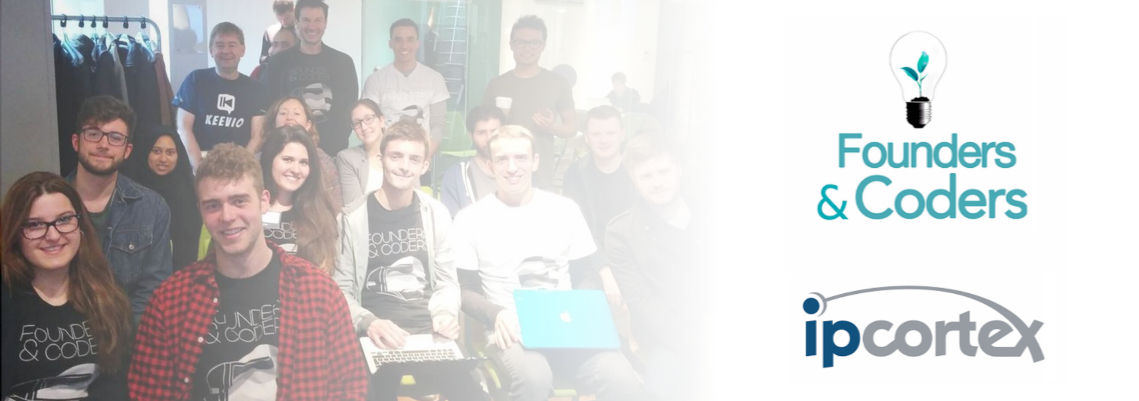
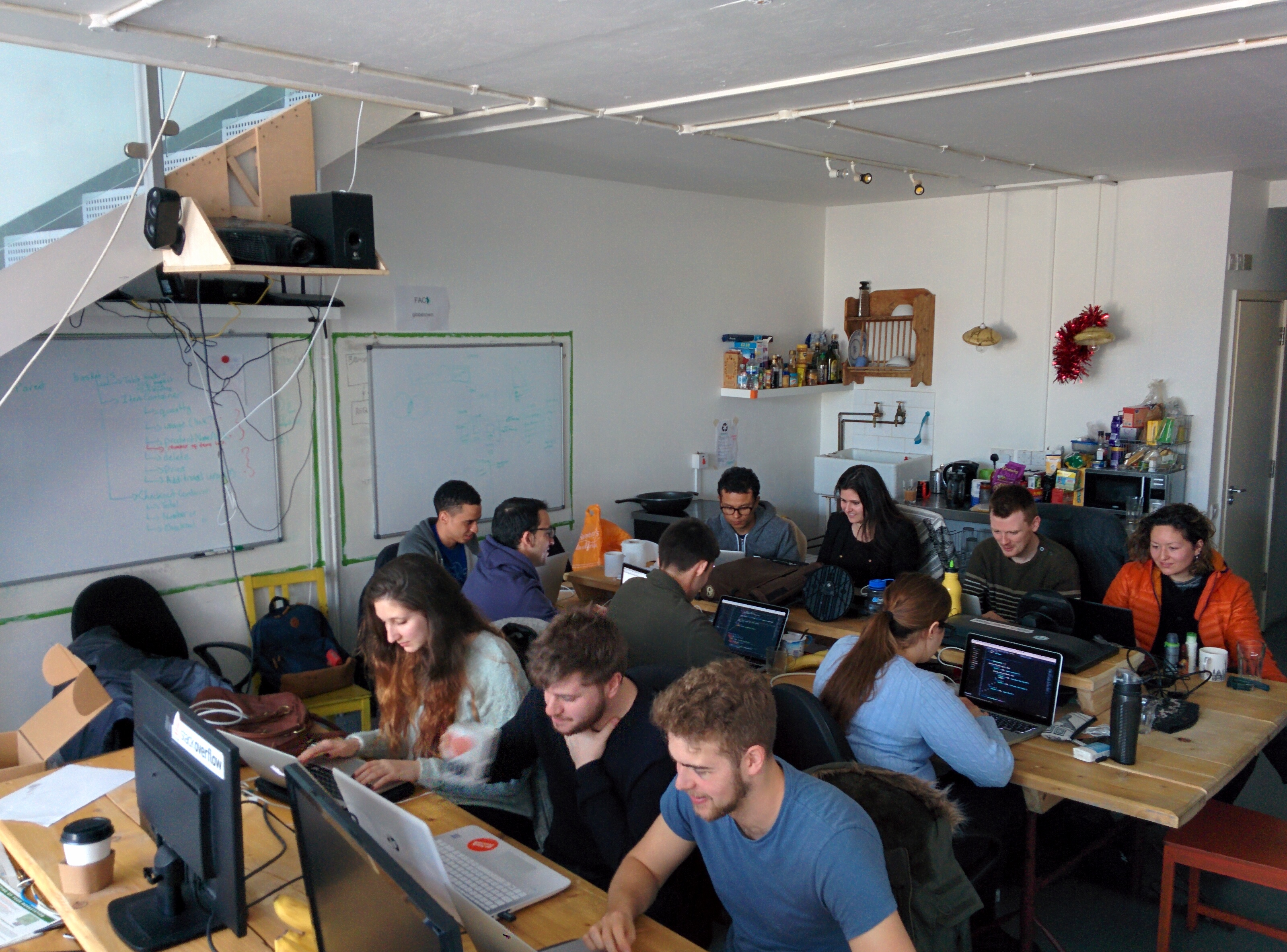
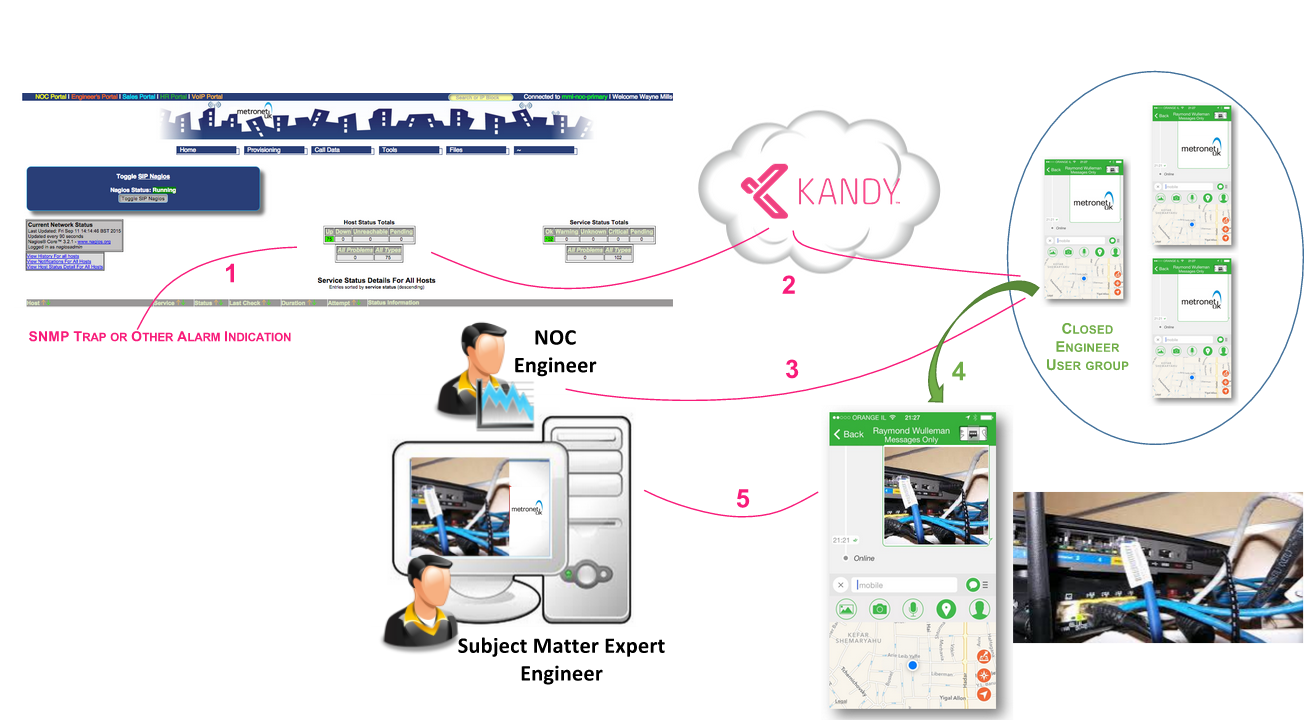
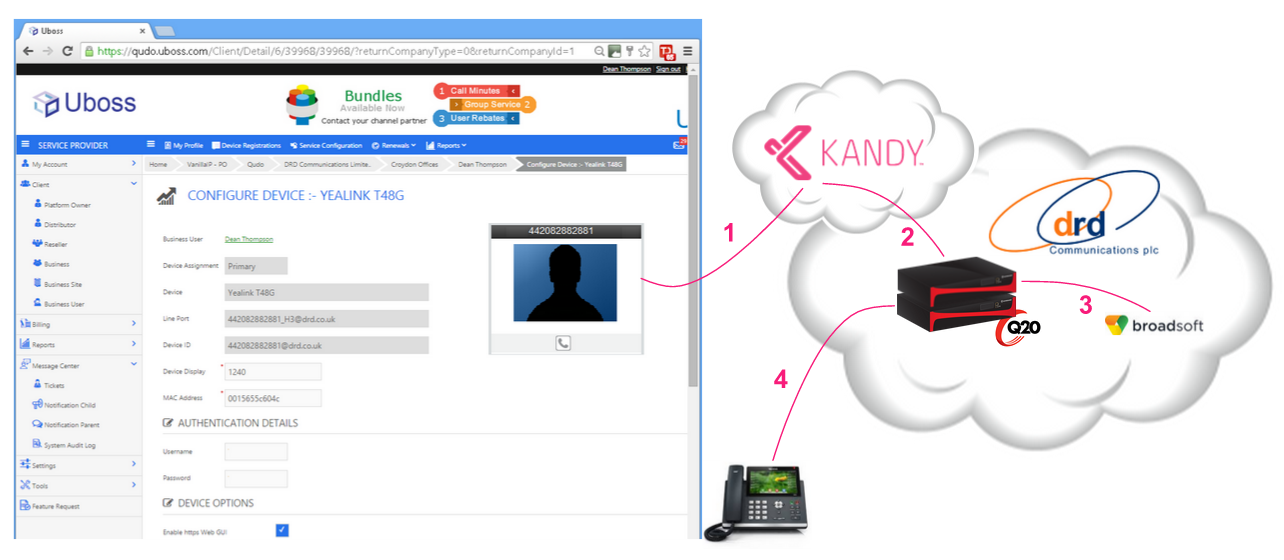
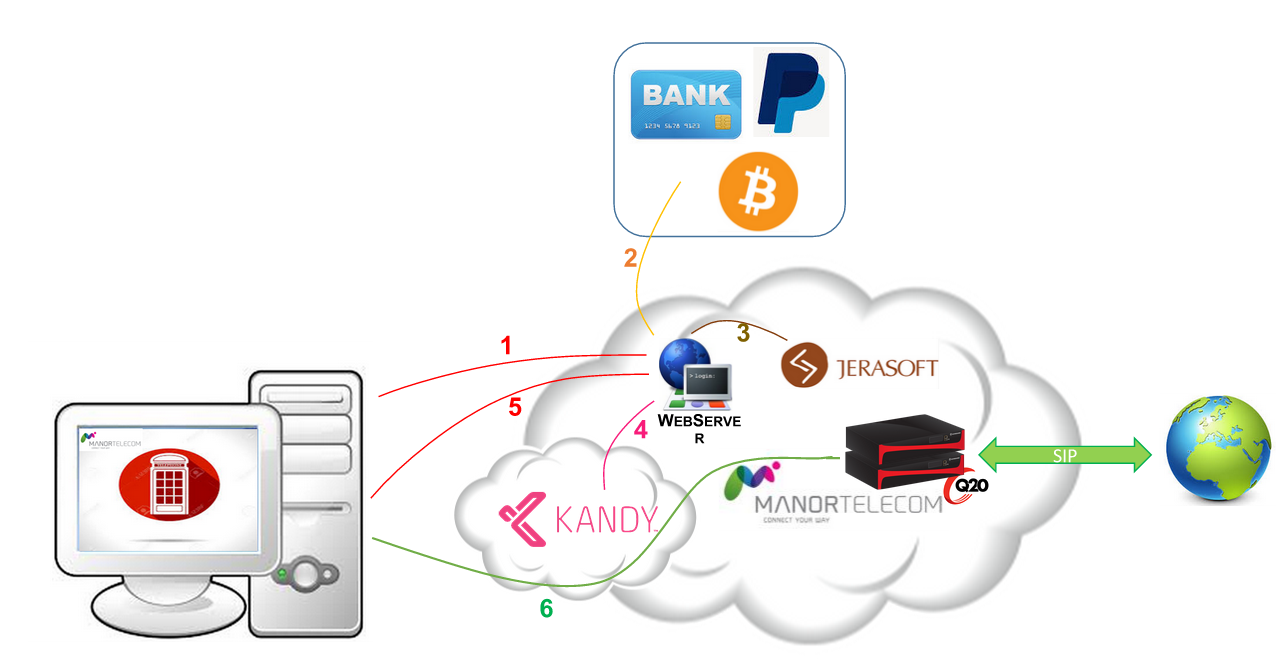
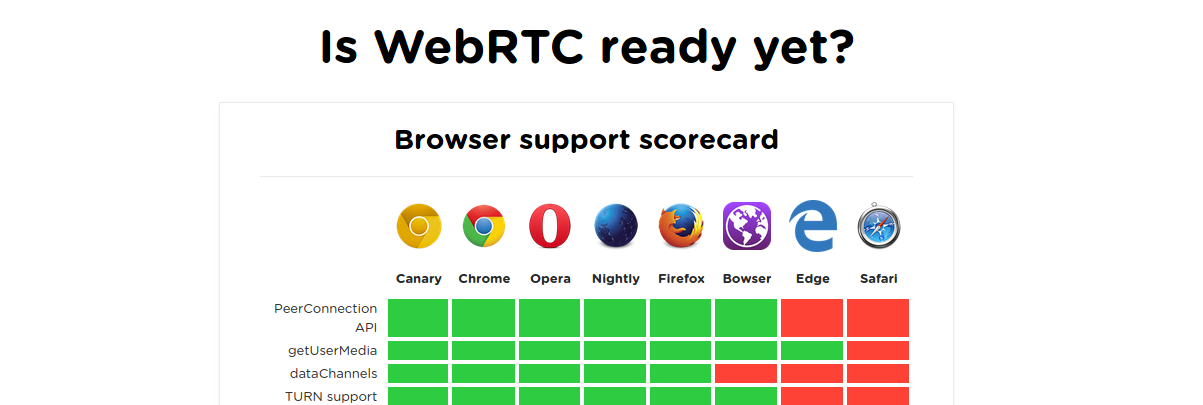

 Carlos Aragon, Senior Solutions Marketing Manager at GENBAND, asks ‘how might UC vendors and service providers profit from WebRTC’? Carlos has extensive experience with both mobile and fixed-line UC services, Unified Communications as a Service and WebRTC. Today, he is intimately involved in GENBAND’s Hosted UC offers to both service providers and enterprises.
 In the fourth of our WebRTC articles this week Peter Gradwell , Founder of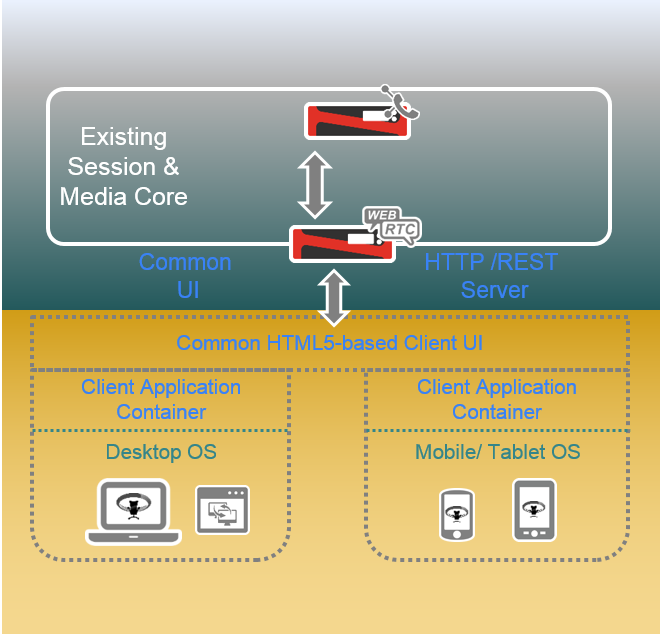
 In the third of our WebRTC articles this week, Ralph Page, Strategic Solutions Director at GENBAND, looks at the emergence of client container technology.
 In the second of our WebRTC articles this week, Chris Barley asks ‘what might the comms reseller look like in a software world’? Chris has spent too many years in telecoms, starting out in business development in the early days at NTL, where he was responsible for satellite services and data network roll out, followed by a product manager role at LCR service provider ACC Telecom, where he was responsible for Intelligent Network and broadband services. More recently Chris worked at iHub, heading up product and network roll out for hosted voice services.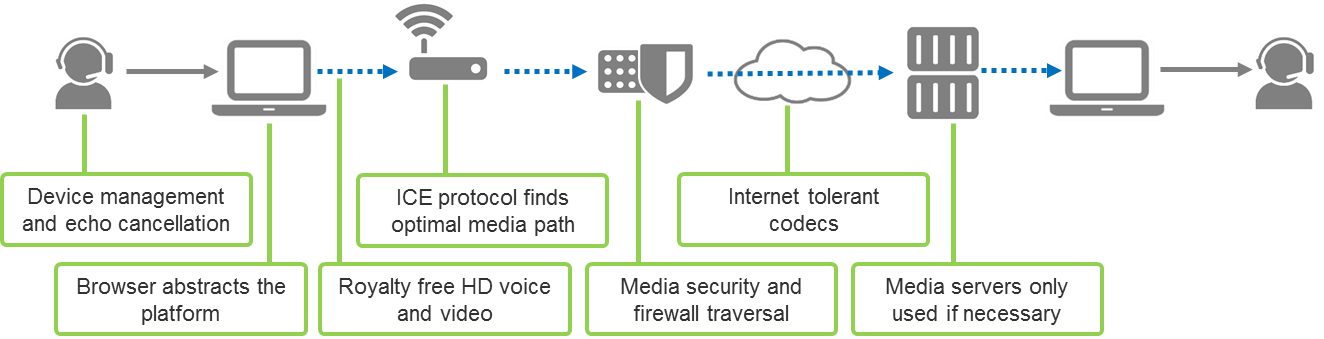
 This is the first of our WebRTC articles this week, Greg Zweig, Director of Solutions Marketing at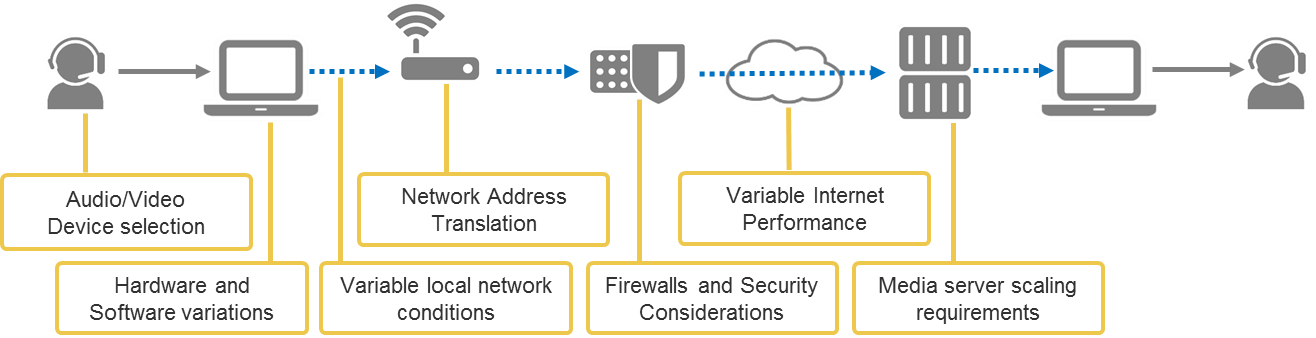
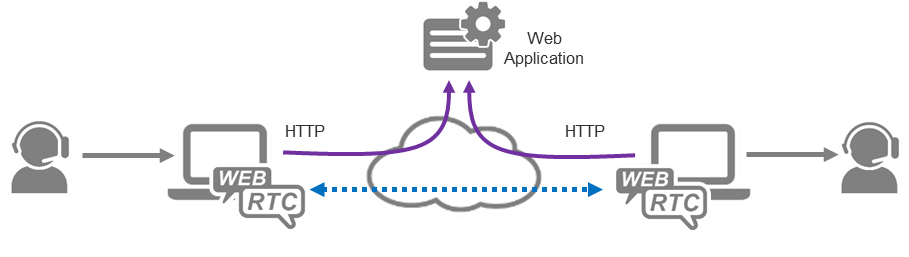
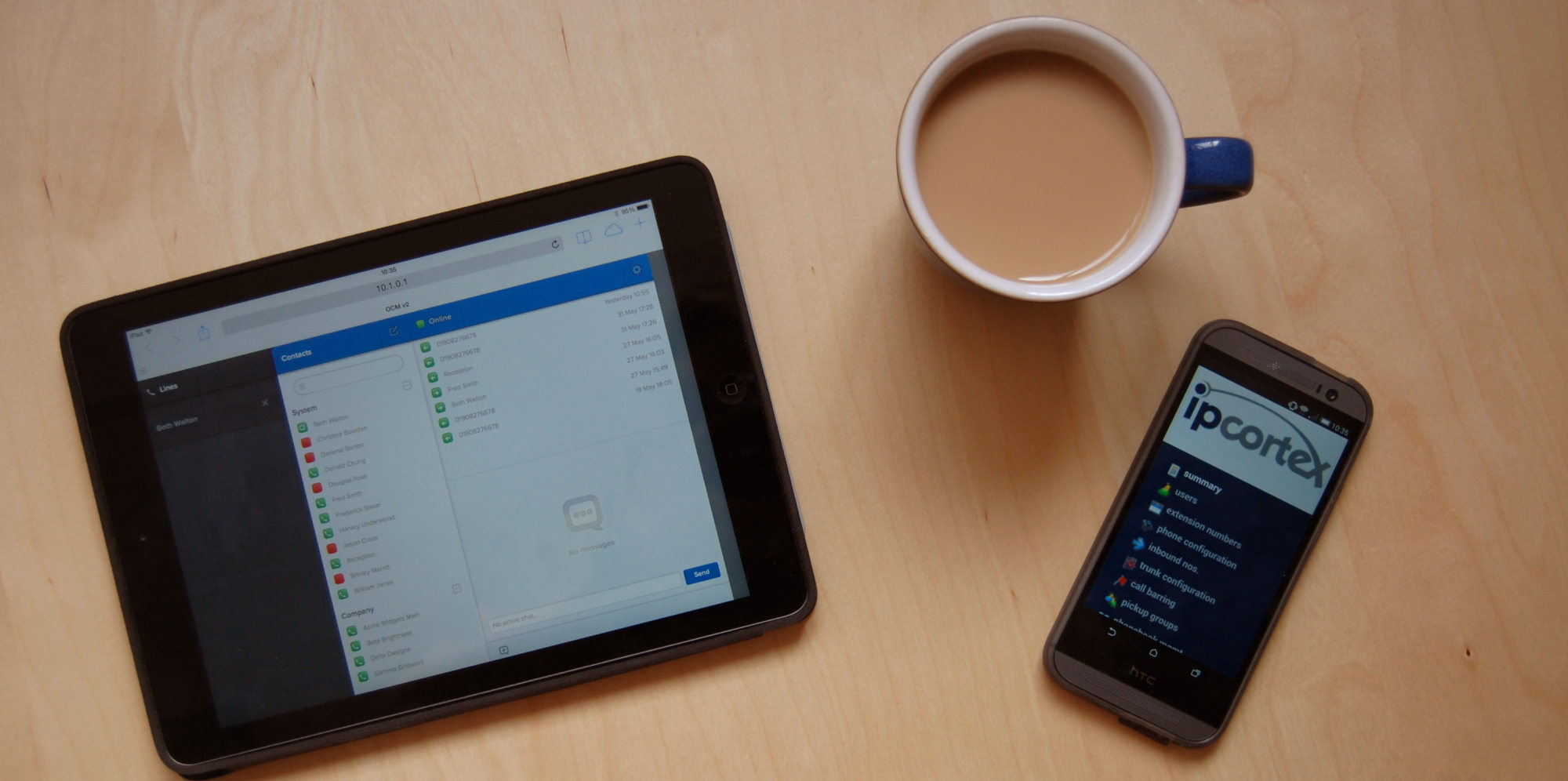
 The business mobile market is in a difficult space right now. Monthly prices are falling whilst handset costs are rising dramatically; a situation made worse in the UK where by and large we still expect to be able to get a free handset with a new contract. Of course we all know the handset is not really free, rather subsidised by the selected tariff, but the result is that many mobile providers only seeing a profit in month 18 onwards.
 This all contributes to an environment where companies in the mobile space must adapt or perish. This isn’t limited to resellers, either. It can even be seen at a mobile network operator level where even the big players are beginning to move into some very untraditional services such as hosted telephony, landline services and even hosted IT products.
 If there’s a question worth asking, in 2027 there’ll be some data that supports the answer. Parties will dedicate greater spend to using big data as the foundation of each campaign – whether that’s in the capture and curation of data relevant to them or analysing it.
 In 2027, MPs will find it much easier to balance their Parliamentary duties with those in their constituency. Technology like WebRTC will mean there’s little excuse to not participate in a debate or vote because they will be able to do so remotely, and there would no longer be the possibility for bills to be passed due to poor scheduling and low turnour. Furthermore, MPs won’t need a second home in London and can spend more time in their constituency.
 An obvious area where technology could improve elections is in the voting process itself. For example, how backwards and archaic is it that we should turn up to a physical location with just a polling card and no verification of identity, yet we already need an online government gateway ID to get a passport? And how secure is it really to leave counts of paper ballots to volunteers? Technology like WebRTC could reduce the technical barrier of providing biomechanical verification in the process.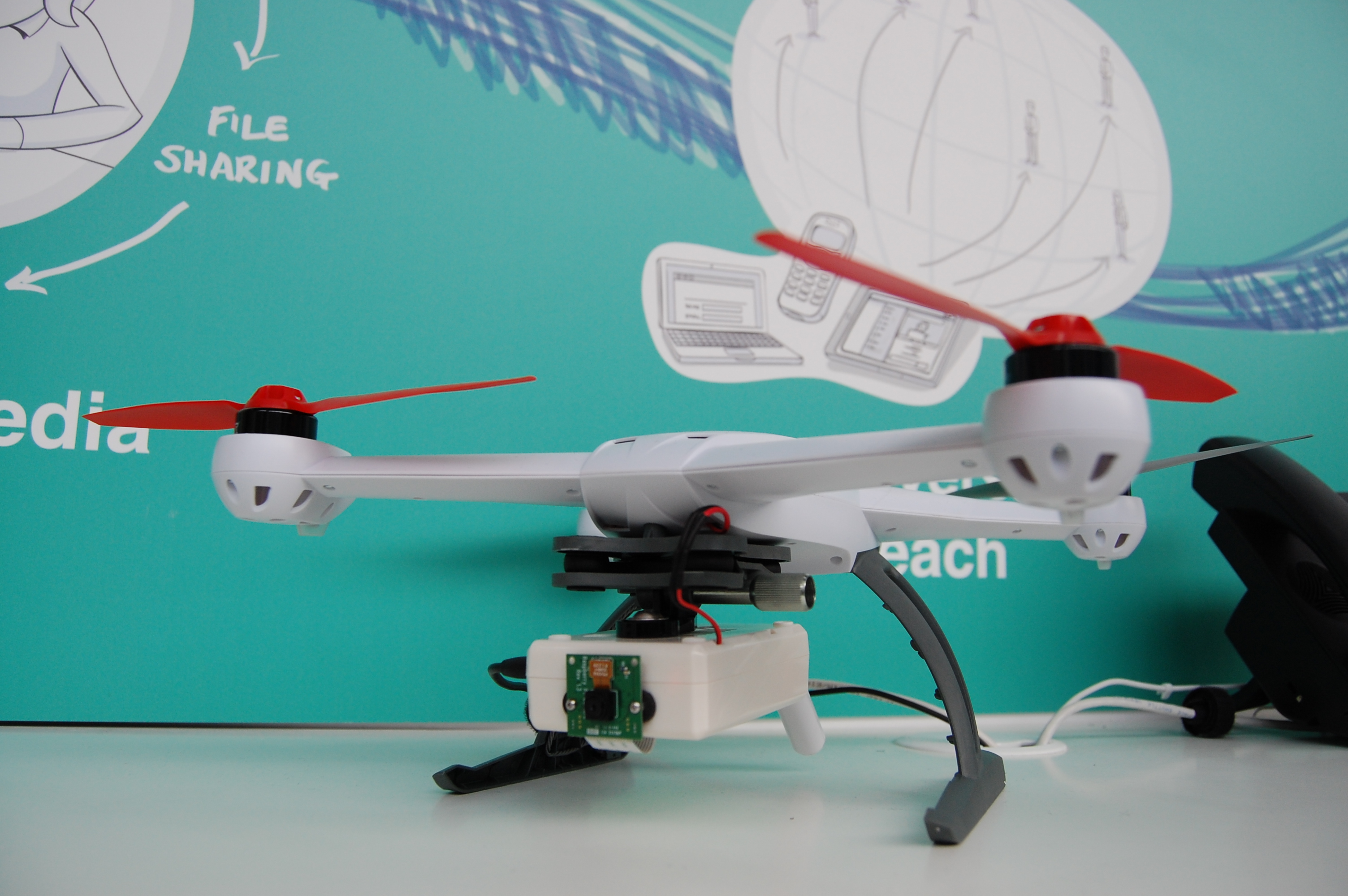
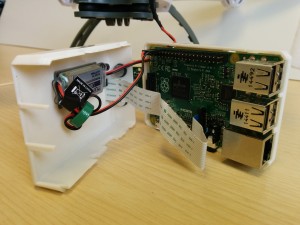

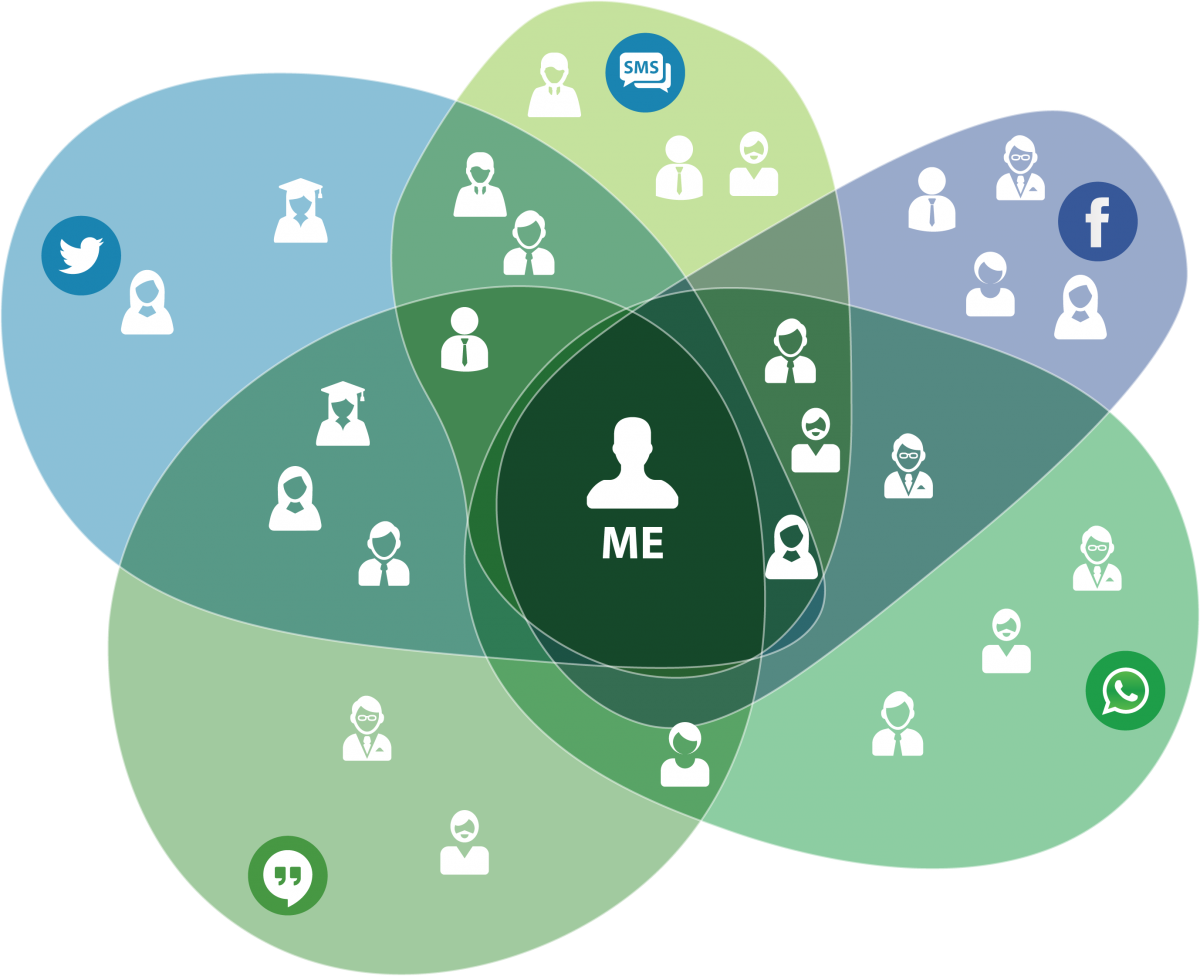
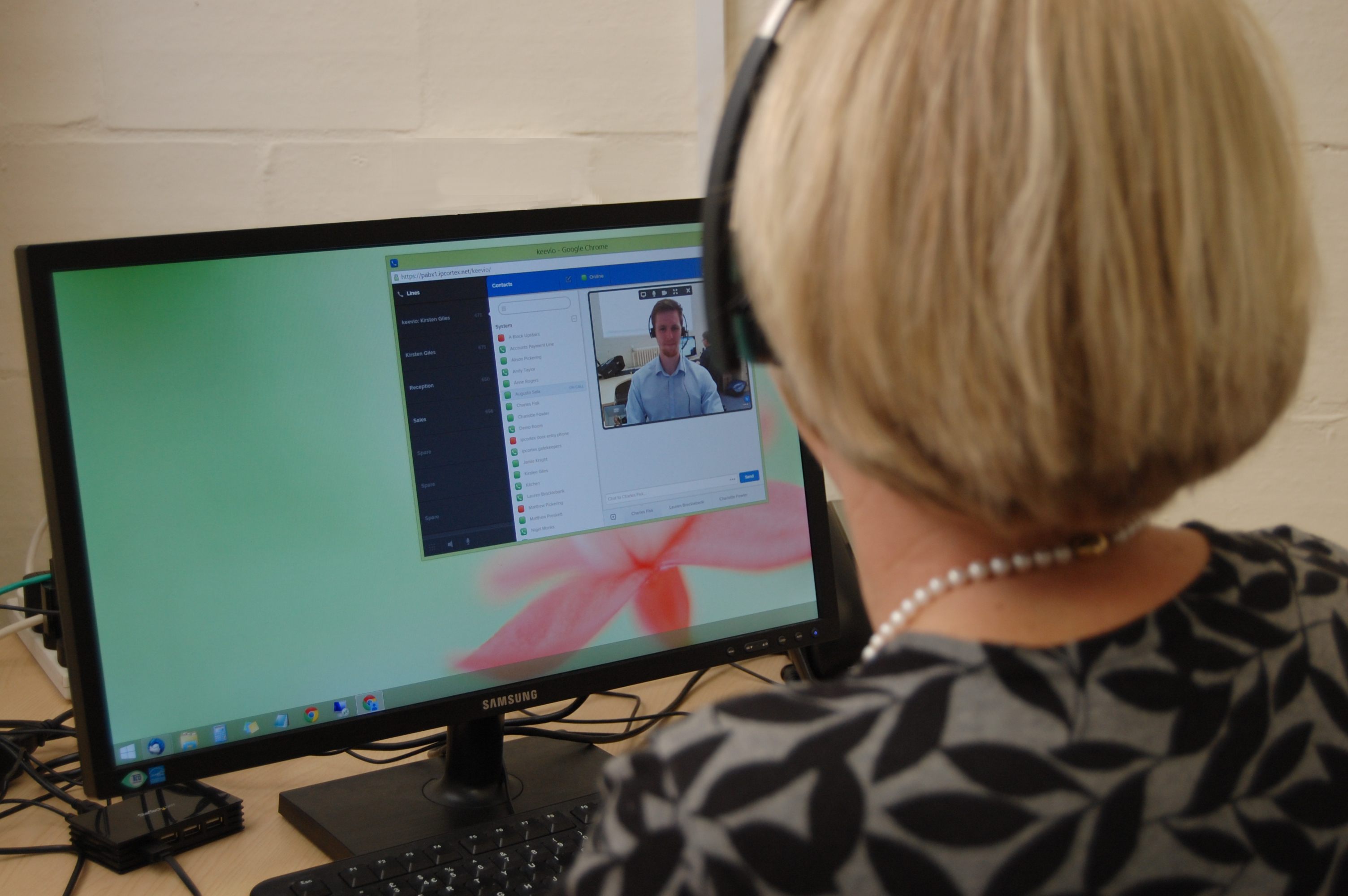
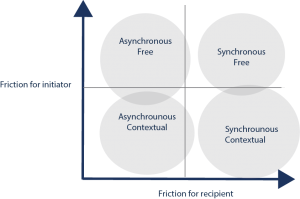
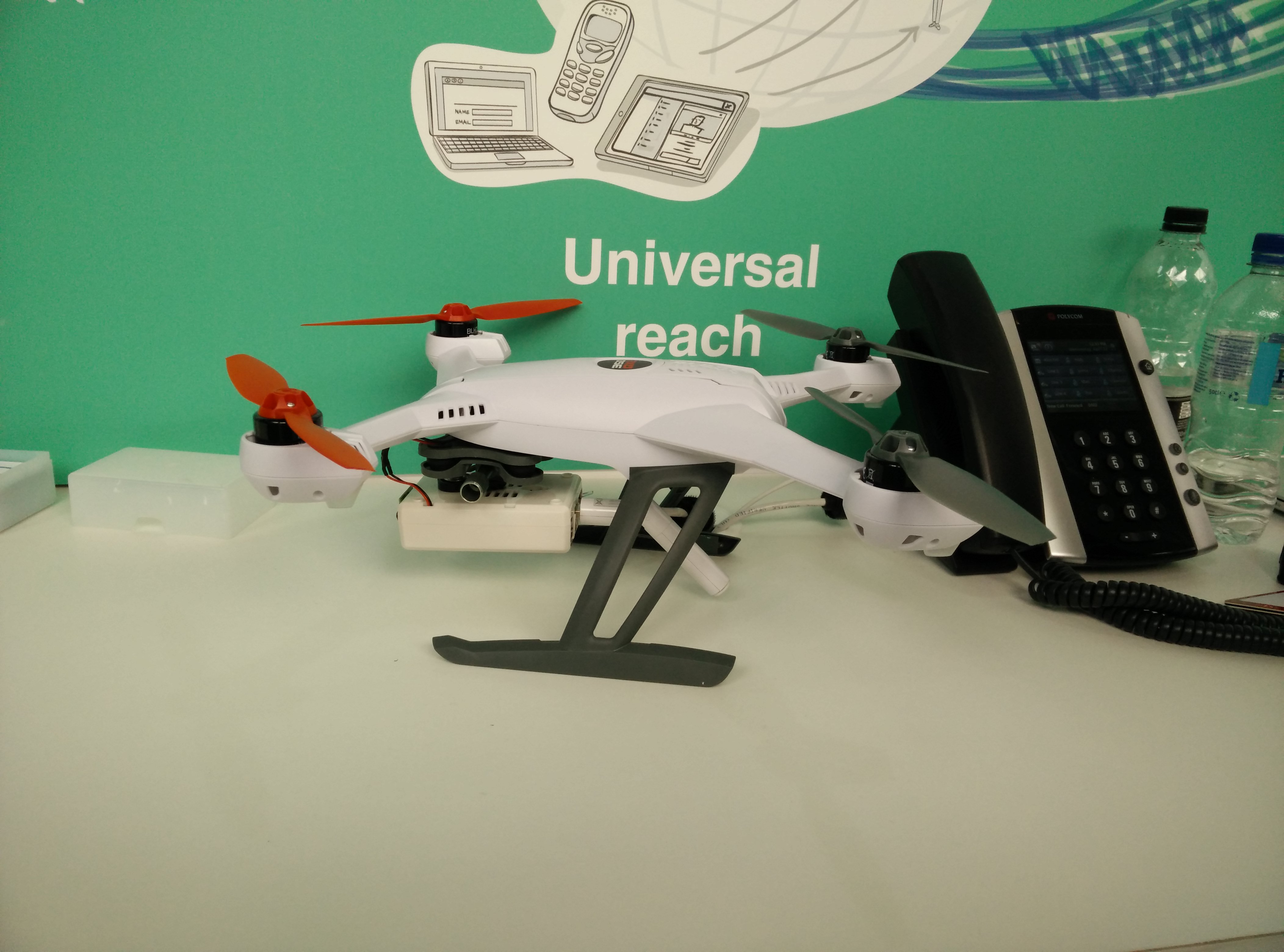


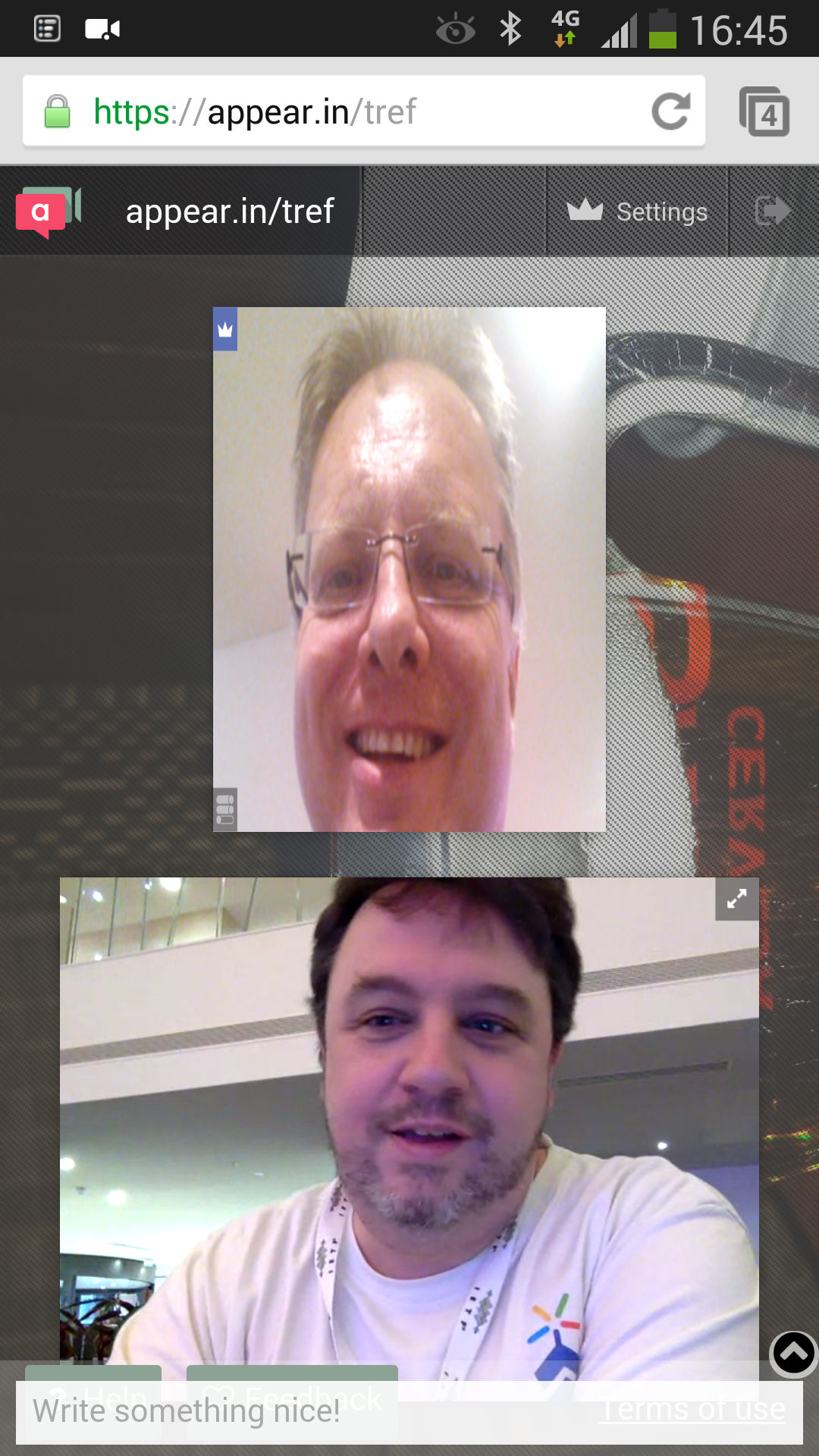
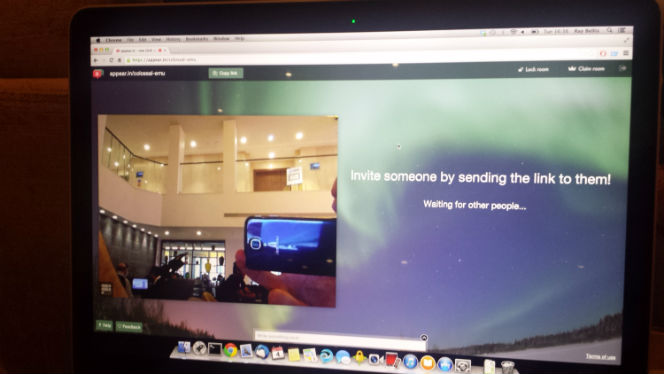
 Chaired the ITSPA WebRTC workshop at Google Campus yesterday. It had a great turnout so there is obviously an appetite to find out a bit more about WebRTC.